Congratulations to SENSE CDT PGR Ashar Aslam who recently successfully defended his PhD thesis: “Severe weather over Southeast Asia”
Ashar joined SENSE in 2021 and completed his PhD at the University of Leeds.
Ashar is remaining at Leeds as a postdoc, where he is working on the UPSCALE project with John Marsham as his PI, in collaboration with the Met Office. He will be assessing the benefits of running global climate simulations at the kilometre-scale, with a focus on the representation of convection and its resultant upscale influence on larger-scale circulation and environmental characteristics. Ashar is now also a co-organiser of PGR Pride, an initiative run at Leeds to provide support, professional guidance, and, ultimately, community for LGBTQ+ identifying postgraduates across the university.
From all of us at SENSE – congratulations Ashar! Wishing you all the very best in your future career – we look forward to hearing about your future endeavours.
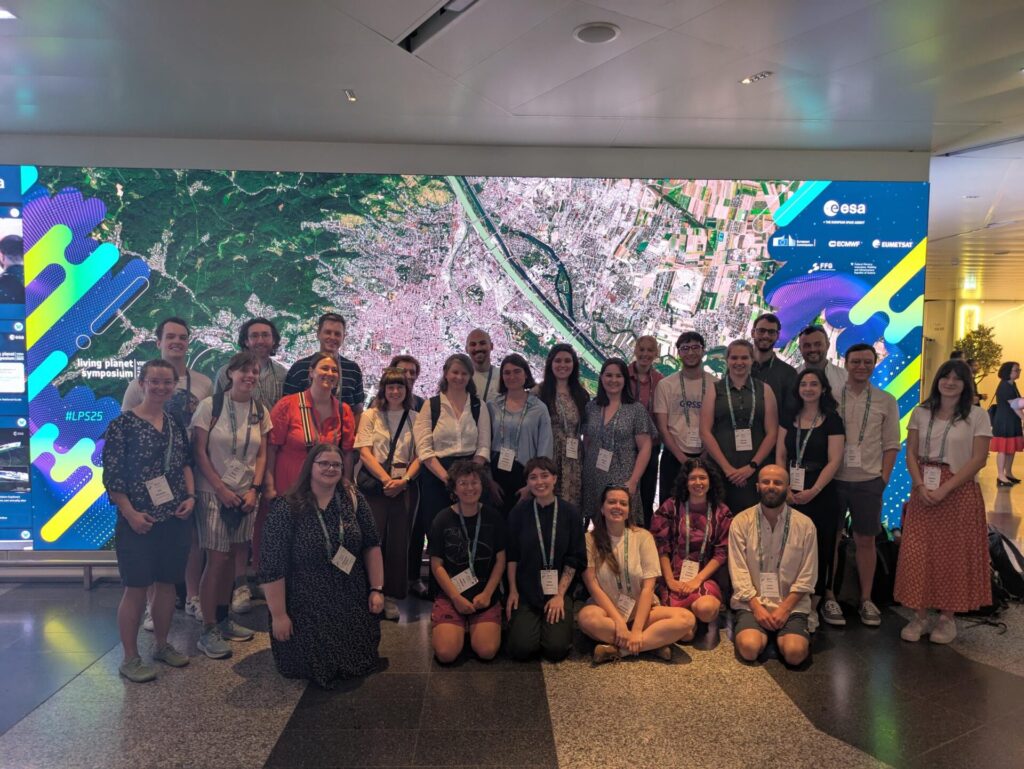
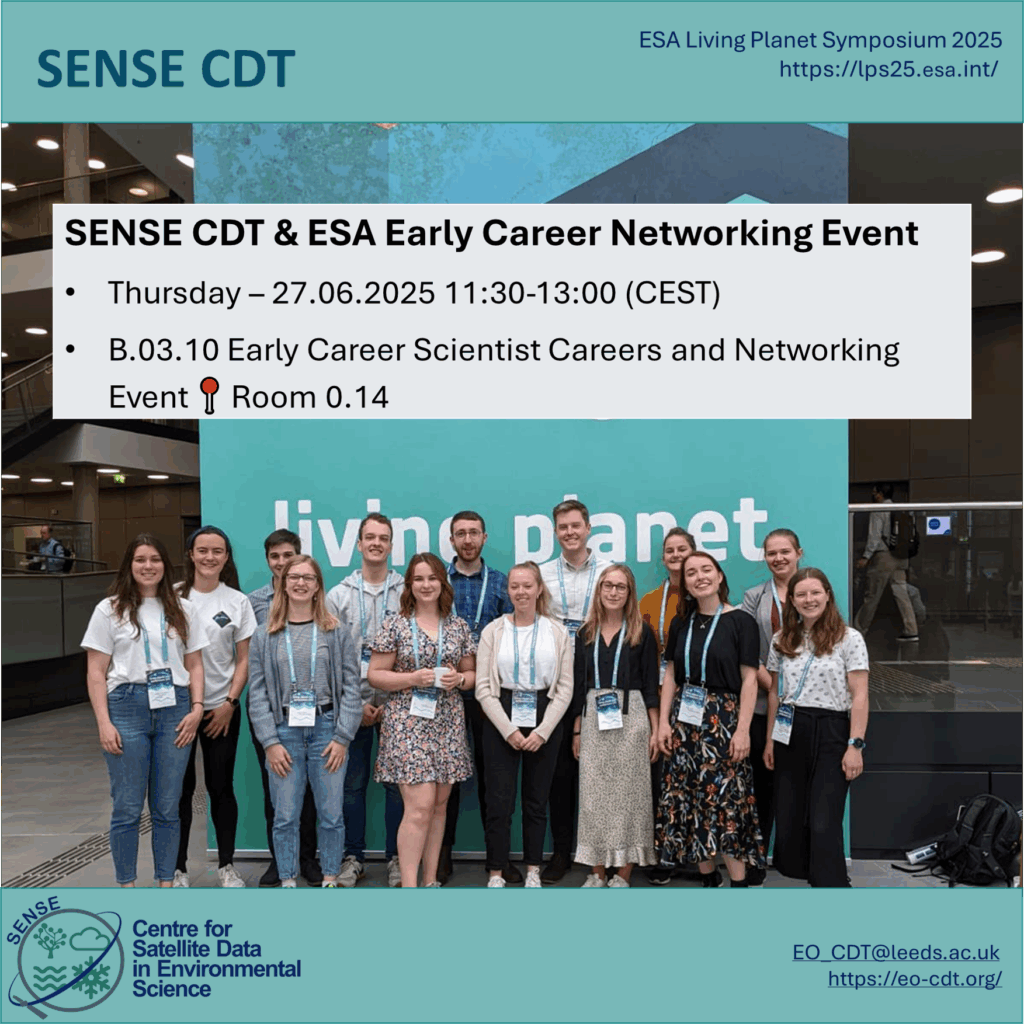
It’s already been a week since ESA Living Planet Symposium 2025 and our Early Career Researcher (ECR) panel and networking event. With standing room only (barely!), the event brought together a packed crowd of enthusiastic Early Career Researchers working across Earth Observation and space science. The energy in the room was palpable, as ECRs connected with peers, gained insights into career pathways, and built new bridges across academia, industry, and government. It was fantastic to see so many bright minds in one space, sharing ideas and forging new collaborations.
Attendees participated in panel discussion and networking that highlighted diverse career pathways, funding opportunities, and practical advice on translating research into societal impact. The event also provided valuable space for peer-to-peer exchange and professional connections—supporting collaboration, visibility, and career development for the next generation of scientists.
🌟 Connect, network, and get inspired at the intersection of science and career journeys!
Early Career Scientist Careers & Networking Event 🗓️ Thu 27 June | ⏰ 11:30–13:00 | 📍 Room 0.14Session B.03.10 – Hosted by ESA & UK Centre for Satellite Data
A unique chance for ECS working in climate, environment, and sustainability to connect across sectors. Expect fast-paced panel talks, career stories, open Q&A, and informal networking over free cake💬
Perfect for anyone exploring what a PhD in EO can lead to.
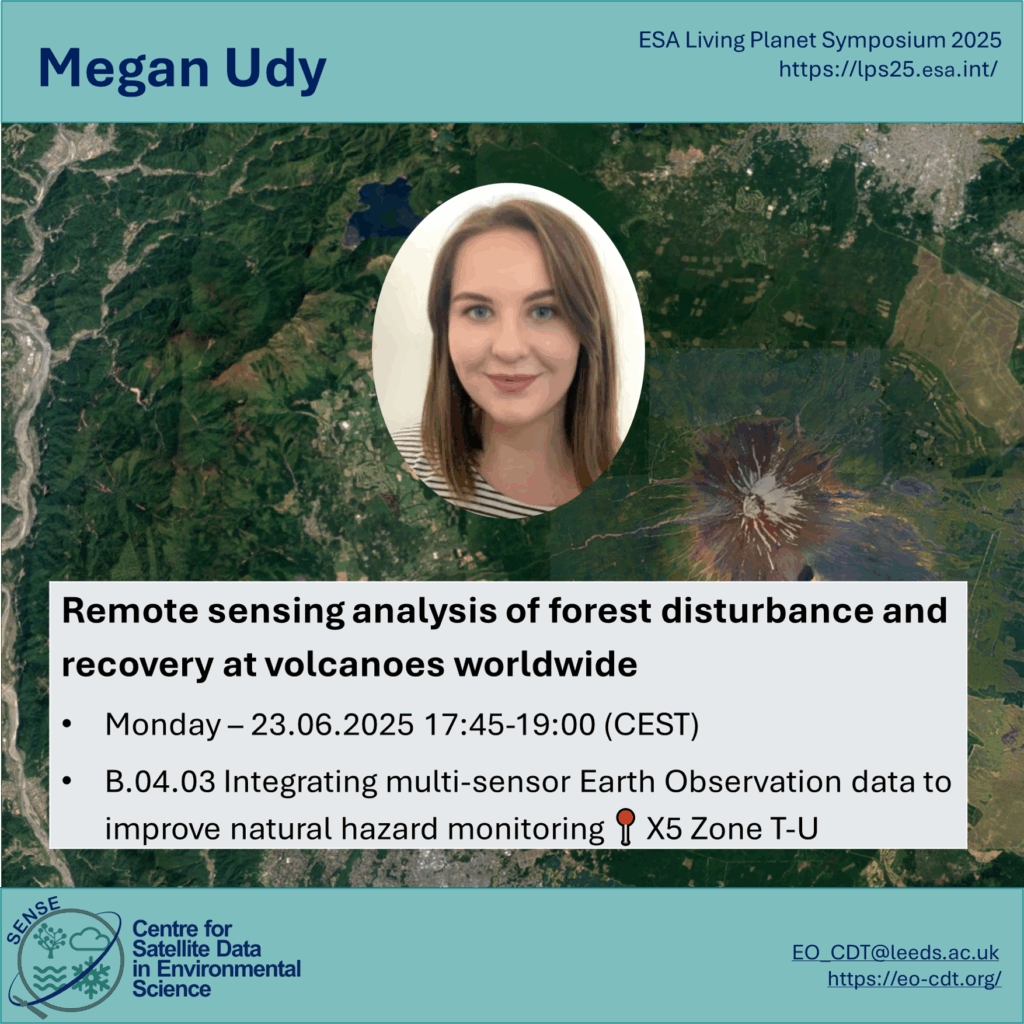
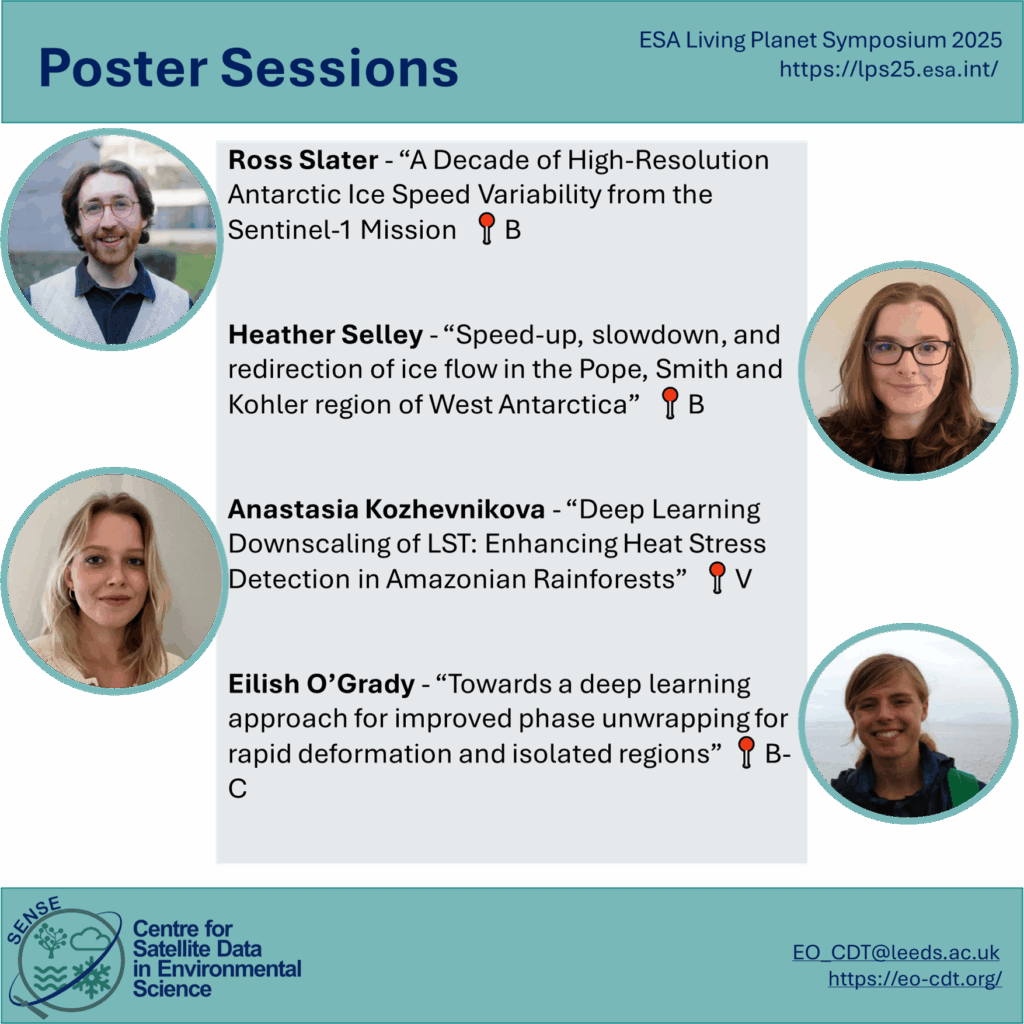
This week many of us at SENSE CDT are at the European Space Agency Living Planet Symposium 2025. SENSE CDT is turning heads at #LPS25! With over 30 PhD students hitting the stage and poster boards, they’re showing just how powerful satellite data and machine learning can be when it comes to tackling global challenges.
Expect everything from tracking Arctic heatwaves in 3D, to decoding the legacy of conflict on land use, to using Earth Observation for disaster response, biodiversity, agriculture, and beyond. You’ll also find the SENSE team leading education efforts through SatSchool, and connecting with the next generation at a dedicated Early Career Networking Event with ESA.
It’s a vibrant, multidisciplinary presence that reflects what SENSE does best—preparing tomorrow’s Earth Observation leaders to shape a smarter, more resilient planet. 🌍✨
Keep an eye on our socials to see what our excellent students and alumni are up to!
Over the last few months SENSE, we’ve had two excellent PhD Researcher working with us to explore the future of SENSE training. Whilst we do not currently have funding for future cohorts of PhD students, there is still a need for specialist Earth Observation (EO) training to maintain and upskill our space sector workforce.
Leam Howe
Emily Butler
Emily Butler led on market research exploring what space sector companies training needs are and the practicalities of sending employees on courses. Leam Howe worked on the existing SENSE training materials and packaging sample modules focusing on EO fundamentals and machine learning methods with practical examples. They worked with us over three months as secondments from their PhDs to help us scope the potential for future expansion. We would like to thank than for their time and effort in supporting SENSE CDT. Their insights and contributions are greatly valued and have provided a strong foundation for shaping training that is relevant, impactful, and aligned with the evolving needs of our community.
If you’re interested in finding out more about potential SENSE CPD please email [email protected].
Institution: School of Geography and Environmental Science, University of Southampton
PhD project title: Insights into the seasonal dynamics of the lake-terminating glacier Fjallsjökull, southeast Iceland, inferred using ultra high-resolution UAV imagery
What is your background?
I’ve recently completed a postdoc in the School of Geography and Environmental Science at the University of Southampton, where I used a combination of both field-based and satellite remote sensing methods to investigate the dynamics of several lake-terminating glaciers globally. Before this, I undertook a PhD – also at the University of Southampton – which I completed in 2022.
Nathaniel standing in front of the glacier Fjallsjökull (and its adjacent lake) while on fieldwork in Iceland during the summer of 2023. Photo credit: Nathaniel Baurley.
Tell us about your project and the area of environmental science are you most excited about?
Lake-terminating glaciers, are, as the name suggests, glaciers that terminate in lakes, and they can be found in almost every glaciated region globally, including Iceland, Patagonia, High Mountain Asia, and even Greenland. Lake-terminating glaciers are important, as in these settings, retreat is not only controlled by the local climate, but also by another, arguably more important mass-loss mechanism, termed frontal ablation. Indeed, over the last decade or so, many lake-terminating glaciers globally have sped up and undergone rapid retreat in response to these processes, and therefore there is a need to better understand the reasons for this heightened dynamic response.
To date, much of our understanding of the processes driving the behaviour of lake-terminating glaciers stems from the application of satellite remote sensing, which allows us to monitor these glaciers across large areas and over long periods of time. However, several of the processes that comprise frontal ablation occur over relatively short timescales, from seasonal, to daily, which can be difficult to capture using traditional satellite remote sensing. Therefore, in order to investigate, and ultimately understand these processes, we need to utilise other remote sensing methods, specifically uncrewed aerial vehicles, or UAVs.
UAVs are a fantastic tool for environmental research as they allow different landscapes and processes to be investigated in really high detail – especially over short timescales – and therefore they’re perfect for investigating those processes impacting lake-terminating glaciers – which is where my PhD comes in. Using ultra-high resolution UAV imagery, I was able to provide new insights into the dynamics of Fjallsjökull, a lake-terminating glacier in Iceland, across a range of temporal scales (seasonally, weekly, and daily), improving our understanding of the processes that are driving the ongoing retreat of the glacier. Personally, the area of environmental research I am most excited about is the continued innovation around UAV platforms and the range of opportunities this will provide future researchers, both within the field of glaciology, as well as environmental science more broadly.
Was having environmental science at the core of your PhD project important to you?
I have long been interested in the impacts of climate change on our natural world, particularly on glaciers and glacial environments. Indeed, the ongoing retreat of glaciers worldwide has severe consequences, not just for global sea level, but also for regional hydrology, which in turn affects freshwater availability (e.g., for consumption/agriculture), hydropower generation, and sediment transport. Improving our understanding of these environments is, therefore, vital, in order to protect the livelihoods of those communities who rely on them, as well as those who will be impacted indirectly through rising sea levels and other associated impacts.
View of Fjallsjökull (and its adjacent lake) taken from directly opposite the glacier while on PhD fieldwork in Iceland in July 2021. Photo Credit: Nathaniel Baurley
Why did you decide to enter the environmental sector?
Having grown up in South Wales, with the Brecon Beacons on my doorstep, I’ve always had an affinity with the outdoors and an interest in the different landscapes that surround us. In secondary school, this quickly resulted in Geography becoming my favourite subject, and – perhaps unsurprisingly – I then went on to study Geography for my degree, at Aberystwyth University. It was during some of my very first lectures that I first learned about glaciers and glacial environments, and thanks in part to the incredibly engaging and passionate lecturer that I had, I was immediately hooked. After this experience, I knew I wanted to become a glaciologist, and I’ve not left the environmental sector since. Indeed, upon completion of my BSc, I undertook an MSc in Glaciology (also at Aberystwyth), before moving to Southampton to complete my PhD and subsequent postdoc…stay tuned for what happens next…!
Nathaniel sitting on a moraine mound overlooking his study glacier, Fjallsjökull (and adjacent lake), while on PhD fieldwork in Iceland in July 2021. A UAV can be seen in the distance flying over the glacier. Photo Credit: Nathaniel Baurley.
What does equity, diversity and inclusion in environmental science mean to you?
To me, it means ensuring that all students have fair and equal access to the same opportunities – no matter their background – whilst also providing a work environment where they feel comfortable, respected and empowered. Although clear progress has been made over recent years – with many UK universities investing heavily to improve EDI – there is still work to do to ensure that the system is robust and that everyone feels supported and comfortable in their workplace.
Throughout my time in academia, I have also been a strong proponent of EDI. During my PhD, I was postgraduate representative for the School of Geography, where I fought to ensure equal access to opportunities for PhD students at both the school and faculty level. I am also currently the president of the International Glaciological Society’s Early-career Glaciology Group, whose primary goal is to enhance the experience of ECRs in any area of cryospheric research (both socially and academically), whilst being welcoming and inclusive to all. In both cases, I have felt empowered knowing I am actively making a difference to EDI – but more can always be done.
Photo from a UAV showing part of the margin of Fjallsjökull, Iceland, and a small ice-dammed lake (brown colour). Crevasses and debris bands are visible on the ice surface, whilst in the lake small blocks of ice can be observed which have broken off from the glacier margin. Photo acquired while on fieldwork in Iceland in September 2023. Photo Credit: Nathaniel Baurley.
What are your hopes for future PhD students?
Firstly, I hope that all PhD students continue to have access to a range of opportunities in order to develop new skills and become more experienced, well-rounded academics. This includes things like teaching, presenting at conferences, working on papers, undertaking training courses and helping with outreach activities. Academia is so competitive now that having a well-rounded CV, with lots of different experiences, can really make the difference. Secondly, I hope that PhD students get the recognition they deserve for all the hard work they do, and how much they contribute to the research and social culture within lab and office environments. PhD students are the future of academia – it’s about time they were recognised (and rewarded) for this role! Finally, it’s important that all PhD students have access to better mental health support at a university level, and that they are provided with a space where they feel safe and empowered to make their voices heard.
Any tips for those interested in applying for PhDs?
Think carefully about the projects you are applying for – can you see yourself working on it for 3-4 years? A PhD is a challenge, but it should also be enjoyable…therefore, applying for project(s) you are highly interested in is extremely important.
Give yourself plenty of time to apply to ensure your application is as strong as possible – get the advice of old university tutors if you’re able
Do your research! Not just on potential supervisors, but also the department/school as well. Does it seem like a good fit? Is the research being carried out by other academics of interest? What about the university? What is the accommodation like? Does it offer sports/social clubs that you’d want to join? Remember, you are more than just your studies. Work/life balance is important, and therefore you need to ensure the university (and the town/city you may be moving to) is also a good fit for you.
If there’s a particular academic you’d like to work with, but they aren’t advertising a project, then don’t be afraid to contact them directly – you’d be surprised how many PhD projects start this way.
Remember there’s no expectation that you will be an expert in the area of research you are applying for. Indeed, you will learn much of this knowledge during the PhD itself, and as such supervisors will be far more interested in the enthusiasm, curiosity, and excitement that you show for their project.
Don’t feel like you have to jump straight into a PhD immediately after finishing your Masters/Bachelors. Undertaking a PhD is a challenge, and at times it will test your resilience, so there is no shame or harm in taking a break before starting. This could be a year out to go travelling, or to work in industry – either way make you do what is right for you (I had a 12-month break between finishing my MSc and starting my PhD and it was the best thing I ever did!)
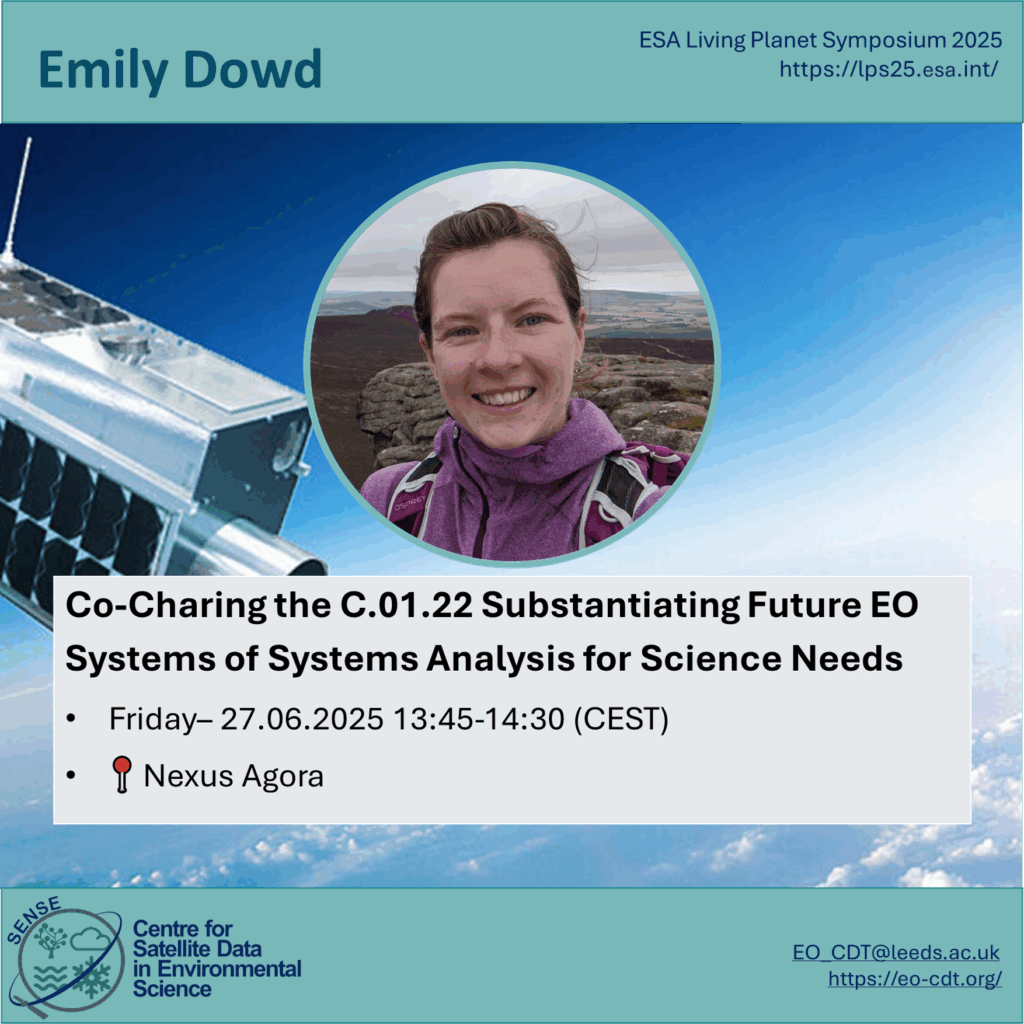
We are proud to announce that Emily Dowd has been awarded a PhD degree on 26th November 2024.
SENSE co-Director Prof Anna Hogg, Dr Ben Wallis, Dr Emily Dowd and SENSE Leeds Centre Manager Dr Heather Selley at the University of Leeds graduation reception in December 2024. Dressed in green and red robes with black tam hats.
Emily joined the NERC SENSE CDT on 1st October 2020 and did her PhD at the University of Leeds under the supervision of Dr Chris Wilson, Prof. Martyn Chipperfield, Prof. Emanuel Gloor, Prof. Alistair Manning and Prof. Ruth Doherty. During her PhD she published two papers, one which captured the first methane gas leak to be detected from space and mitigated in the UK. She completed a two-month CASE partnership at the Met Office which gave her the skills to estimate the gas leak using the Numerical Atmospheric-dispersion Modelling Environment (NAME). Emily also completed one month as a visiting scientist position at the European Space Agency where she worked on developing the nested grid model for the TOMCAT CTM and compared simulations with Senintel-5P retrievals.
During her PhD, Emily co-founded the SatSchool outreach programme with three other SENSE students. This project introduces key Earth Observations concepts to 11-15 year olds and the project continues to reach school pupils across the UK.
What’s next for Emily?
Emily is now a Research Fellow in Greenhouse Gas Modelling at the University of Leeds and is working on the EO4CH4 project. This project aims to use Earth Observation to support the reduction of methane emissions from agriculture in Australia.