



University of Edinburgh logo British Antarctic Survey logo National Oceanographic Centre logo University of Leeds logo

Research Experience Placement: Hollie Black

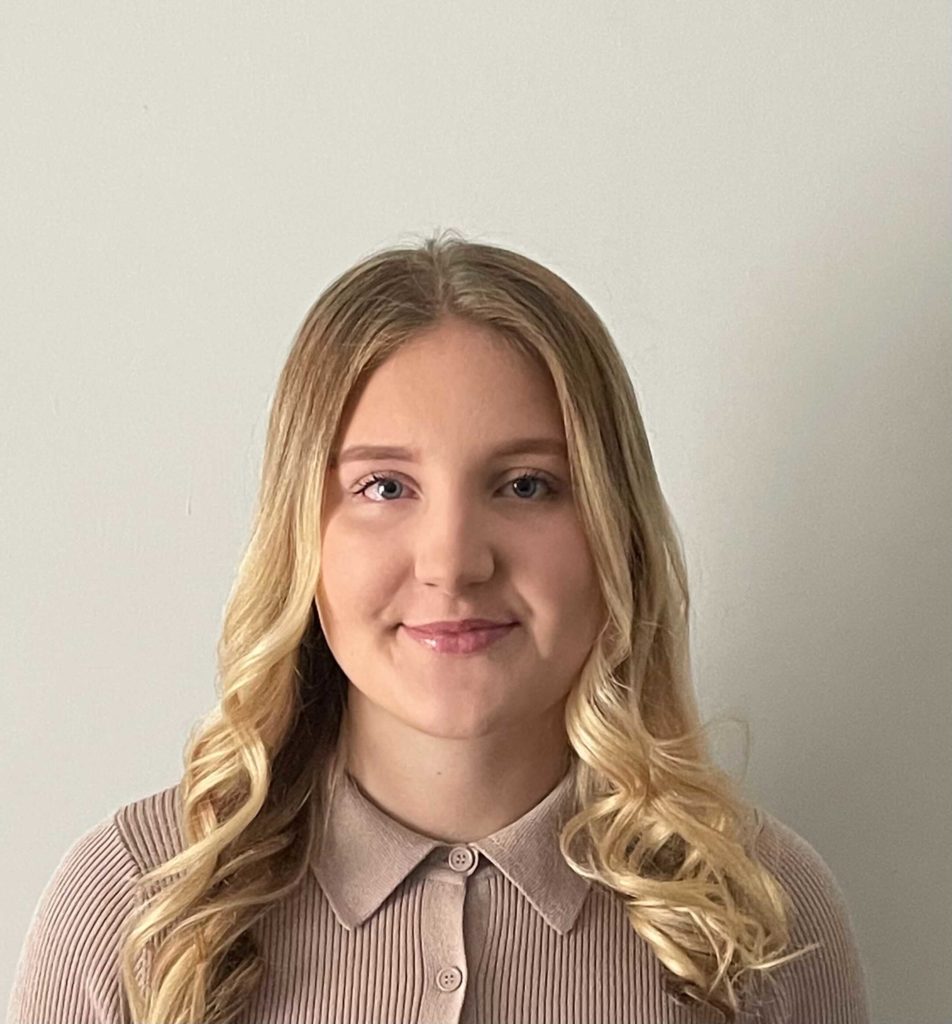
Hollie Black

Hollie is a student from the University of Strathclyde who worked with Dr Gary Watmough and his Geospatial Livelihoods group on a project entitled Supporting the development of a Children’s vulnerability to climate change index in Uganda

What are you studying?

A Masters in Mathematics and Statistics at the University of Strathclyde

Tell us a bit about the project you have been working on this summer?

I have been working on creating a subnational Children’s Vulnerability to Climate Change Index for both Uganda and Tanzania. Currently the Children’s climate risk index (CCRI) is being created on a national level and we are investigating if there should be further funding to create the index on a subnational level as countries will have different scores across the districts within the country. However, the current CCRI only gives one singular vulnerability score for each country. This is also not as useful as a subnational index for policy makers as the subnational index will allow governments to look within their own country and determine which areas need help and for which sector e.g. education.

What new skills have you learned while doing this internship?

I have learned how to use arcMap which is a GIS software, have learned about using STAN in R as a multilevel modelling code type, learned how to do principle component analysis in SPSS and mostly learned about climate change and the social economic vulnerability it causes especially to children.

How have you found working with your research team here at the University of Edinburgh?

Working with my research team has been great everyone is very supportive and helpful. I think it is very important that you feel comfortable asking questions to your supervisor and I definitely did which made the experience more enjoyable.

What has been the highlight of the internship for you?

The highlight for myself has been being able to present my index to the creators of the Children’s Climate Risk Index which is an team containing academics from the University of Southampton, the University of Leeds, the University of Edinburgh and UNICEF.

How has doing this internship changed your plans or thoughts about your future career.

This internship has pushed me towards applying for a PhD within geoscience as I found the project very interesting and enjoyed the research I carried out.
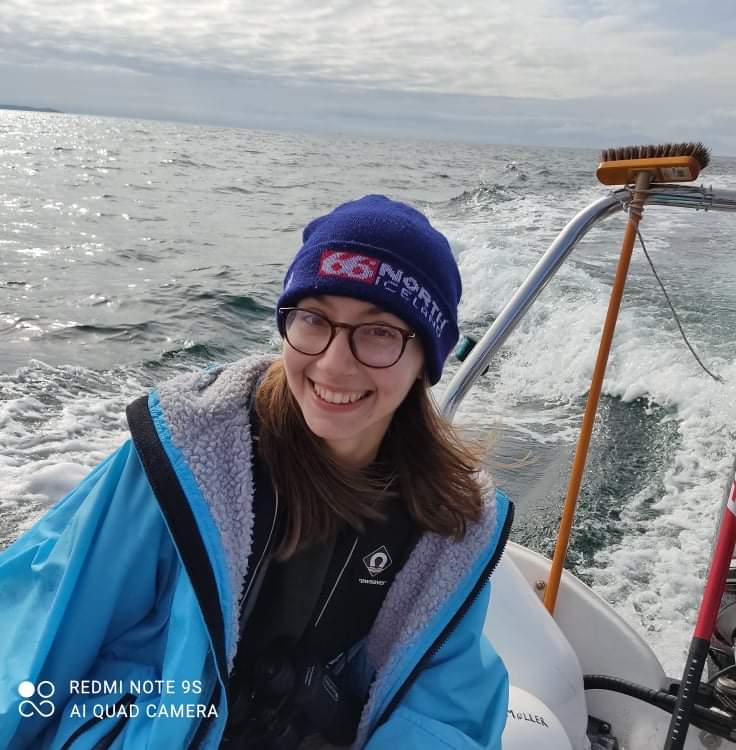
Research Experience Placement: Ilaria Stolberg

During summer 2021 SENSE have been involved in the NERC Research Experience Placement Scheme and hosted 14 interns with our supervisory teams. The purpose of the REP scheme is to allow undergraduate students from their final or penultimate year of study to gain experience of working on a research project by completing a short paid internship with some of the SENSE supervisors and their research groups. This will hopefully allow the students to learn about what being a research student would be like and encourage them to apply for a PhD in the future.

Because due to Covid the placements were able to be offered remotely we attracted a large number of excellent applicants from across the UK and the competition for places was tough. We had some excellent interns who have blown us away with the amazing work they have done in a really short space of time. In addition to the placements we have also been providing the interns with opportunities to network and make connections with other interns and current PhD student through the Space Hub Yorkshire Intern Network.

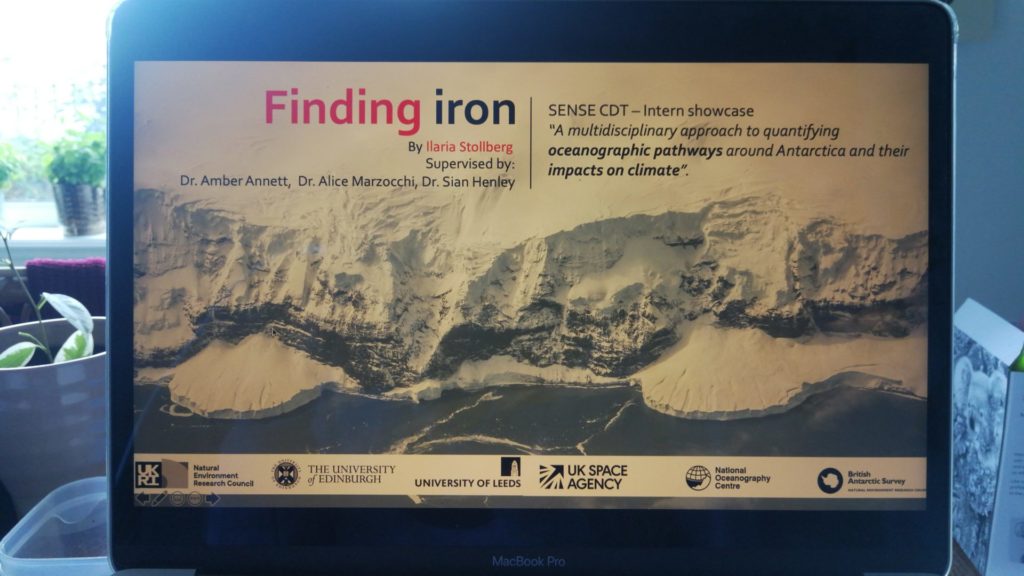
First off we have Ilaria Stolberg who is a student from Scottish Association for Marine Science. Ilaria worked with Dr Amber Annett (University of Southampton), Dr Alice Marzzochi (National Oceanography Centre) & Dr Sian Henley (School of Geosciences, University of Edinburgh) on a project called A multidisciplinary approach to quantifying oceanographic pathways around Antarctica and their impacts on climate

What are you studying?

I am currently in my 4th and last undergraduate year studying Marine Science at the Scottish Association for Marine Science – with a focus on oceanography and the endless uses of robotic platforms in marine research.

Tell us a bit about the project you have been working on this summer?

My project, which I lovingly nicknamed “Finding iron”, was “A multidisciplinary approach to quantifying oceanographic pathways around Antarctica and their impacts on climate. In the Southern Ocean, iron controls the very foundations of the food web, and it is extremely scarce. Using data from an expedition in 2018, I built a 2D section of the Drake Passage showing the concentration of various radioisotopes, which are naturally occurring “chronometers”. Radioisotopes help us understand how long ago a water mass has been in contact with sediment, a major source of iron in the Southern Ocean. By looking at other environmental properties, such as temperature, oxygen, and salinity, I also tried to find out where these water masses were coming from – were they the cold, dense waters that spill into the depths of the Southern Ocean as ice forms, or warmer waters travelling from the Equator, or eddies breaking off from the churning currents of the Drake Passage?

What new skills have you learned while doing this internship?

Asking simple questions to smart people! And programming, and networking, and finding my own answers when no one else could help. Handling “raw” data also showed me that a single sentence in a textbook is likely the tidy, clean result of years of someone’s efforts. I truly got to experience what the scientific method is all about – less of a linear road, and more like a windy, unpaved (and exciting) trail.

How have you found working with your research team here at the University of Edinburgh?

My research team (Dr. Sian Henley, Dr. Amber Annett, and Dr. Alice Marzocchi) proved to me that academia can be a welcoming space. Being trusted to produce sound results and to advance my own hypothesis were such important milestones for me, as an aspiring scientist; I was listened to and treated as an integral part of the team. My supervisors also made plenty of time to discuss my future, point me to useful resources, and encourage me to pursue an academic career – I had many eye-opening moments.

What has been the highlight of the internship for you?

Getting to know the paths that brought my research team to where they are, definitely! Learning the behind-the-scenes of the scientific community opened the gates to a world that always seemed “a bit too far”.

How has doing this internship changed your plans or thoughts about your future career.

I have taken a leaf from my team’s book – I am much more intrigued and knowledgeable about polar biogeochemistry than when I first started my internship. I now dream of (and work towards) getting my own laboratory to study the processes that govern the polar seas, and how climate change might affect them (and us). Environmental policy is also a field that I became interested in during this internship – as a result, I am researching opportunities that bring biogeochemistry and the “human factor” together.