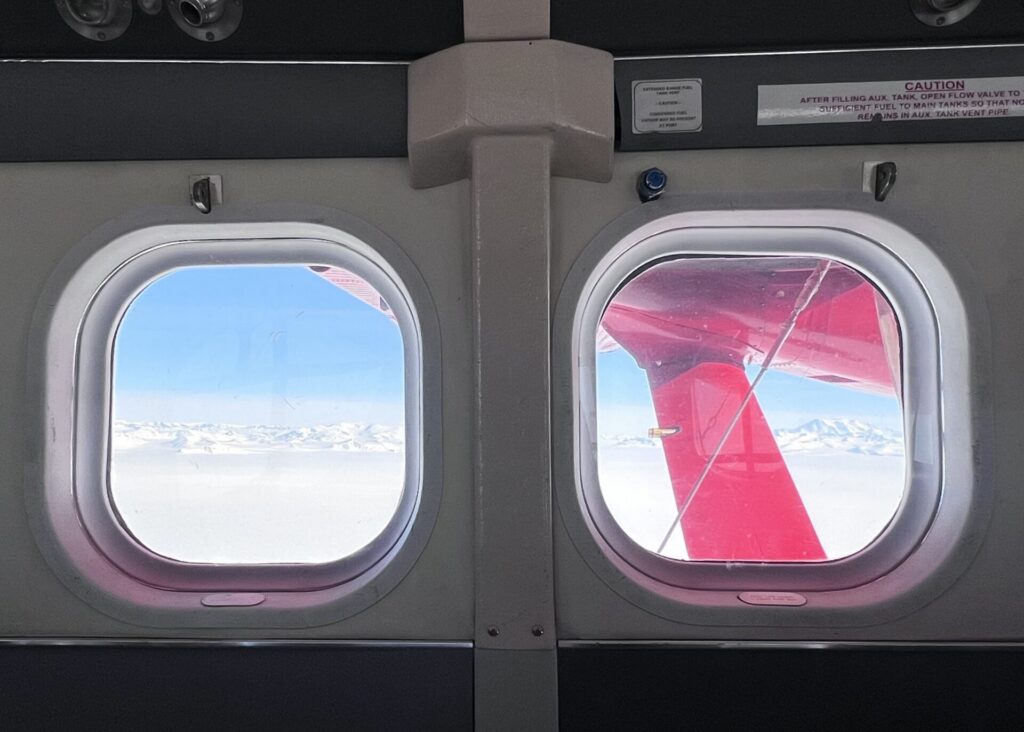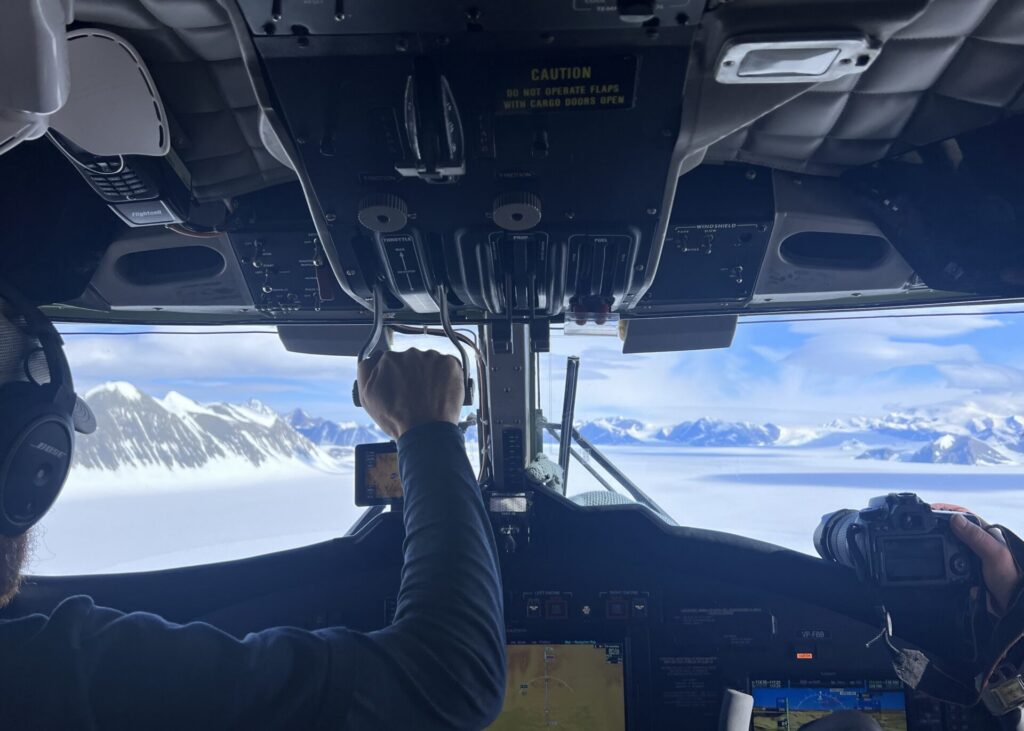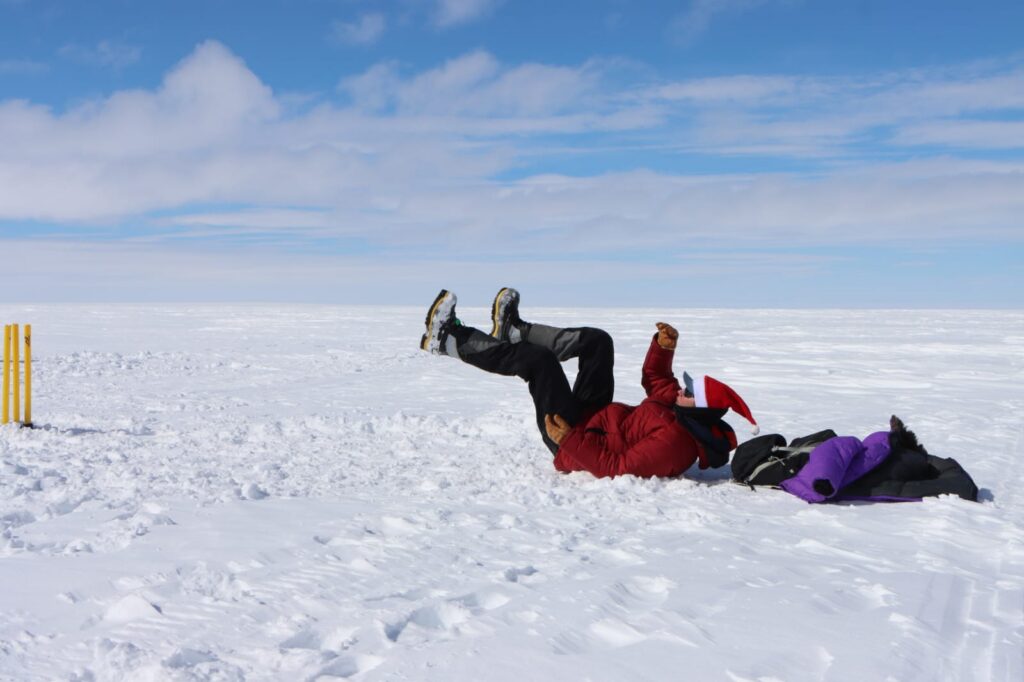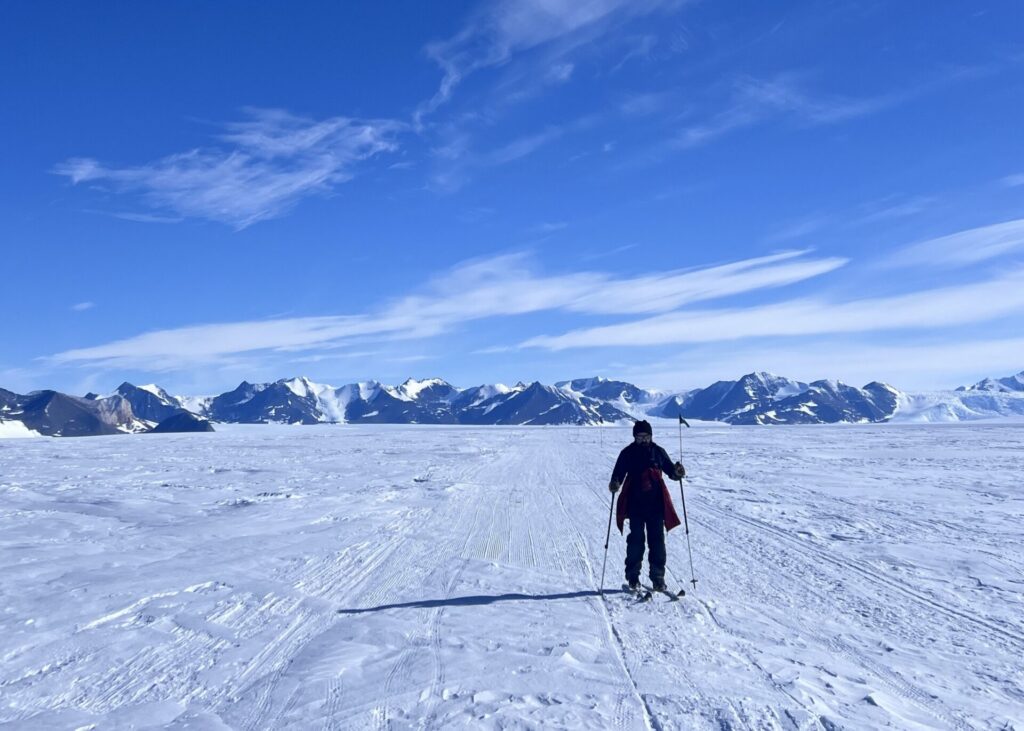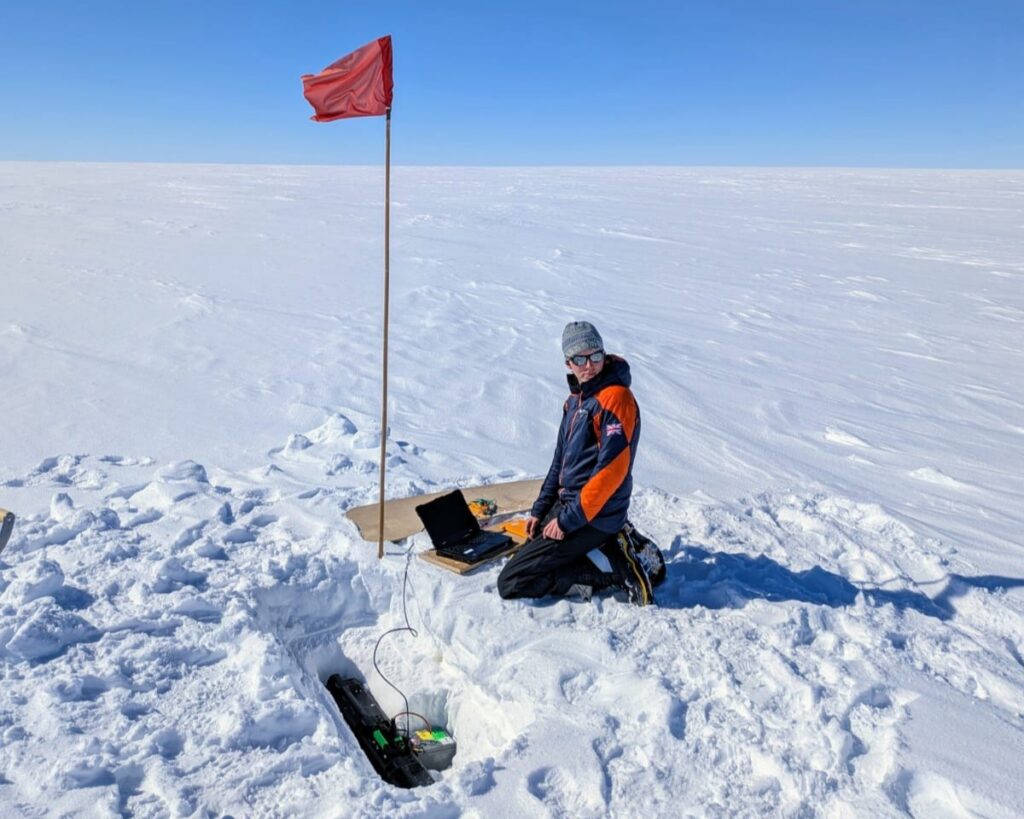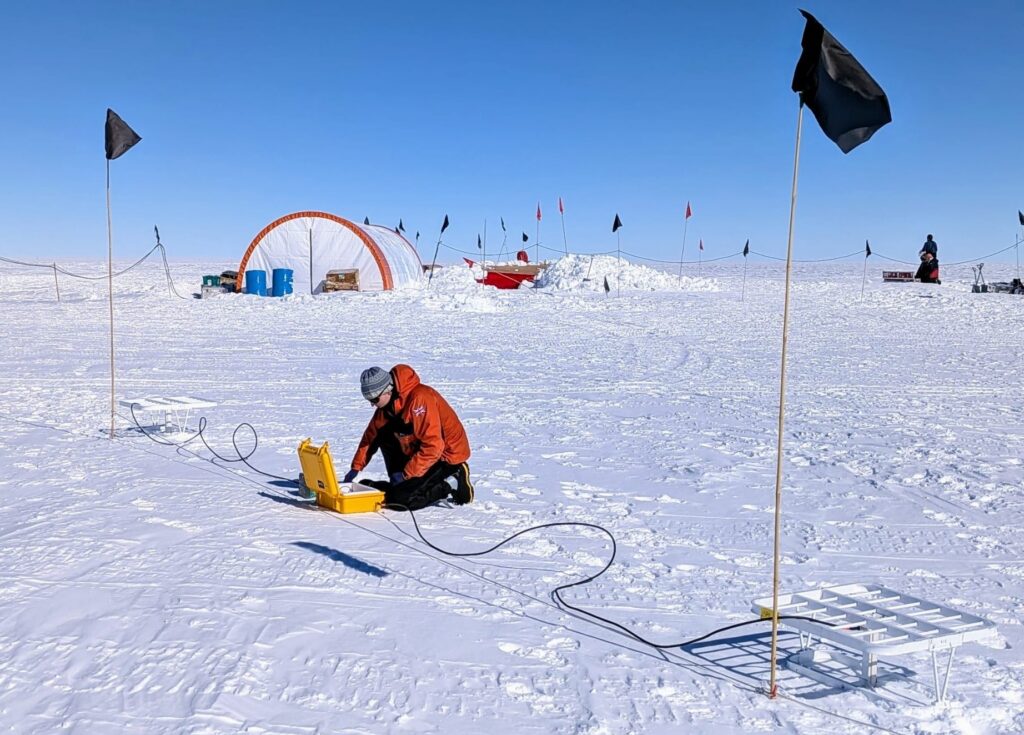




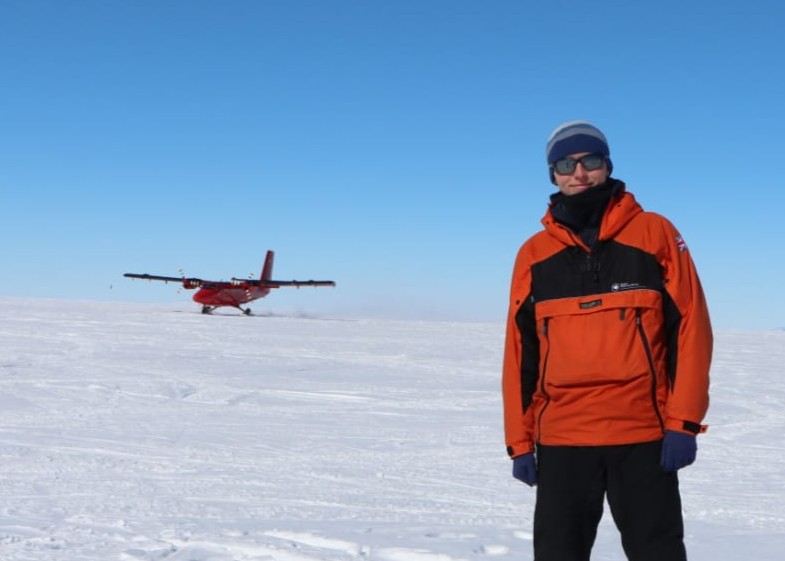
In November 2025, SENSE student Harry Davis left for a temporary new home (Figure 1) to join the British Antarctic Survey’s REWIND ice-core drilling team for three months of fieldwork in Antarctica.
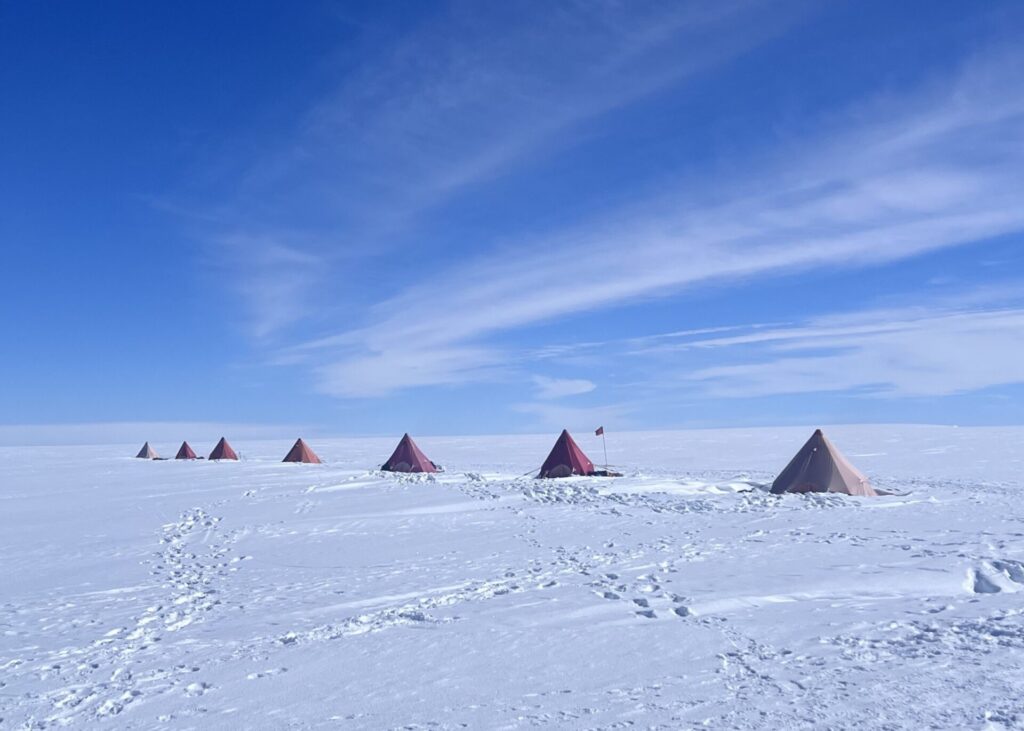
The aim of this project was to recover an ice core from the southern Antarctic Peninsula Ice Sheet (see Figure 2). Chemical analyses of ice cores provide invaluable climate records that offer context for predicting future climate change. Notably, the ice core at REWIND is the deepest – and likely the oldest – ever recovered on the Antarctic Peninsula!
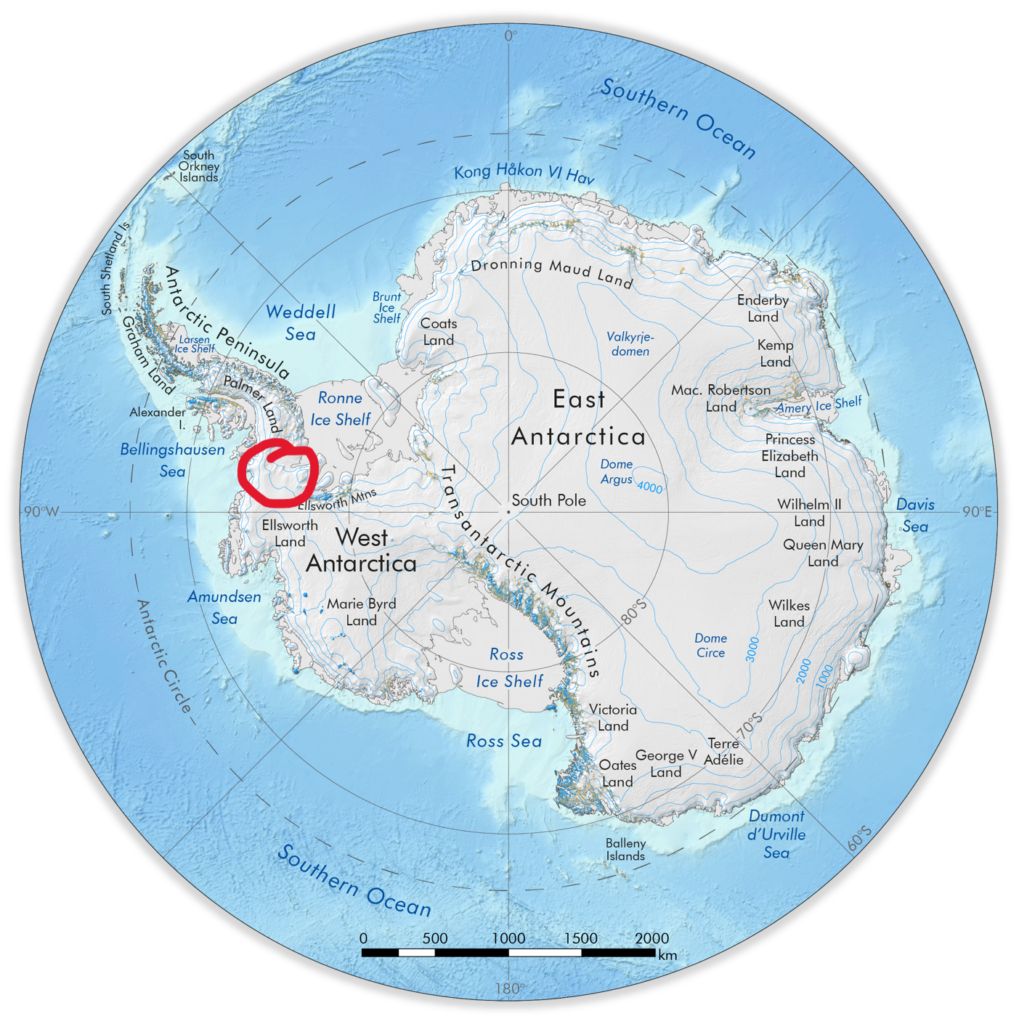
Over the past two years, my research has focused on using radio-echo sounding data in West Antarctica to extrapolate data from these deep ice cores to larger spatial scales and date bright reflectors in our dataset. This approach allows us to infer climate variability across extensive regions within some of the most vulnerable parts of the Antarctic Ice Sheet.
In the first chapter of my work, I utilised these newly dated reflections to constrain a model that assesses the suitability of new deep ice-core drilling locations. We believe a site along the poorly-constrained Bellingshausen Sea coastline could yield an exciting new climate record. For more details, you can read an article here (EGUsphere – Assessing the potential for an ice core in the southern Antarctic Peninsula to elucidate Holocene climate history).
To complement the ice-core data at REWIND, I worked with Dr Carlos Martin (Glaciologist at the British Antarctic Survey) and Andy Croy (our lead field guide) to conduct several geophysical surveys across the surrounding area (Figure 3). This was a particular highlight of mine as we traversed across waves of sastrugi with our radio-echo sounder in tow! You get a true appreciation for the vastness of the continent as you cruise towards an ever-distant horizon.
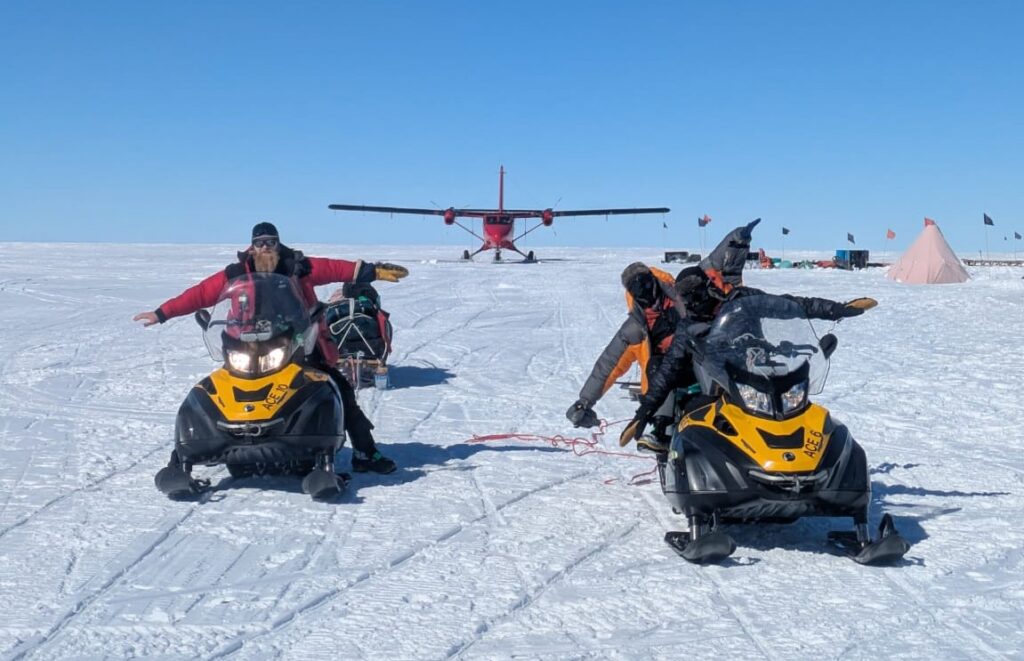
This was truly a trip of a lifetime… After looking at so many of these datasets through a screen for the last two years, it was so special to get hands on with the radar instruments and collect new data! I am so grateful for the support from SENSE and the British Antarctic Survey for this unforgettable adventure.
The visit wouldn’t be possible without the support of our funder, the Natural Environment Research Council.