University of Edinburgh logo British Antarctic Survey logo National Oceanographic Centre logo University of Leeds logo

Fieldwork in Yukon

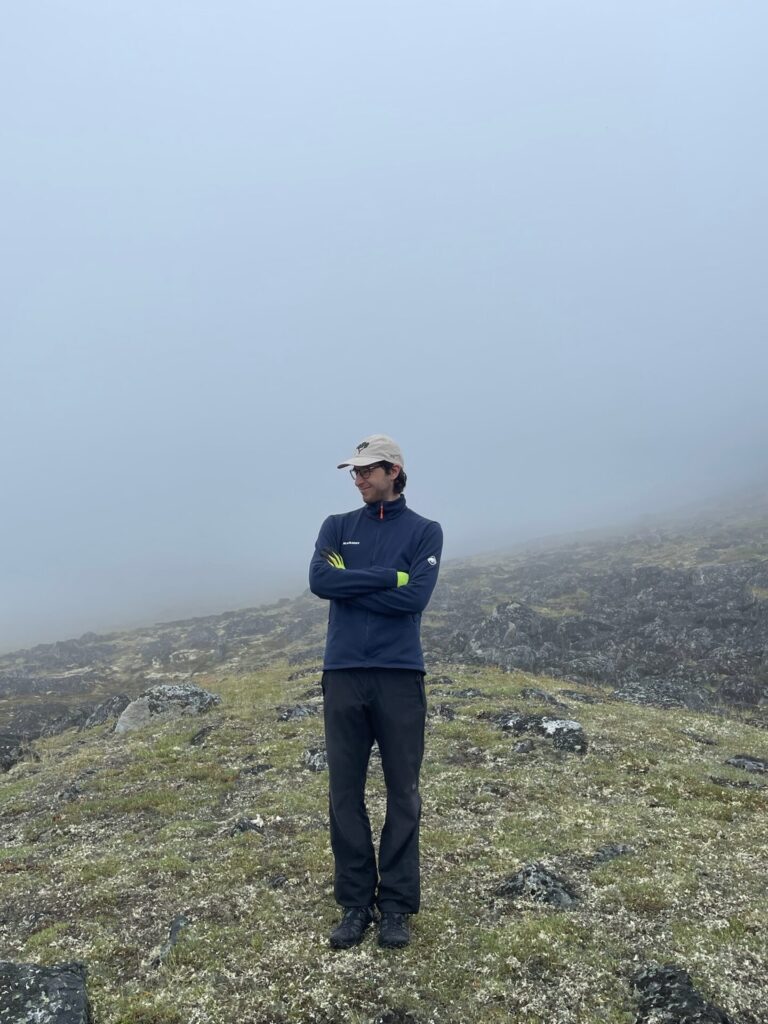
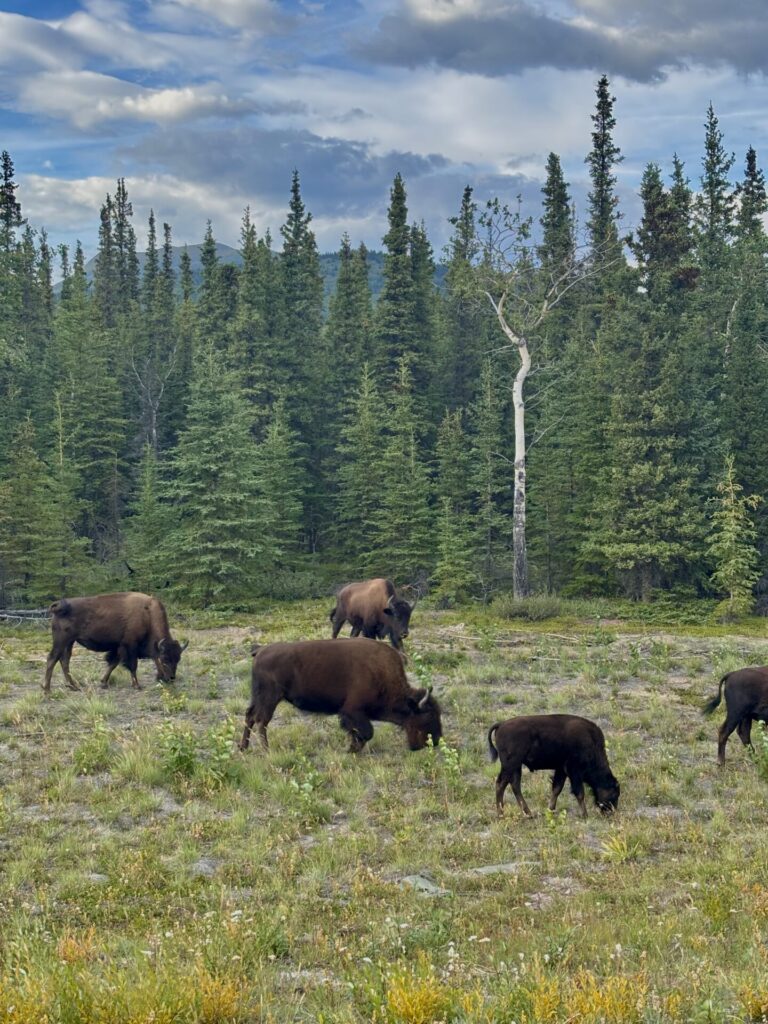
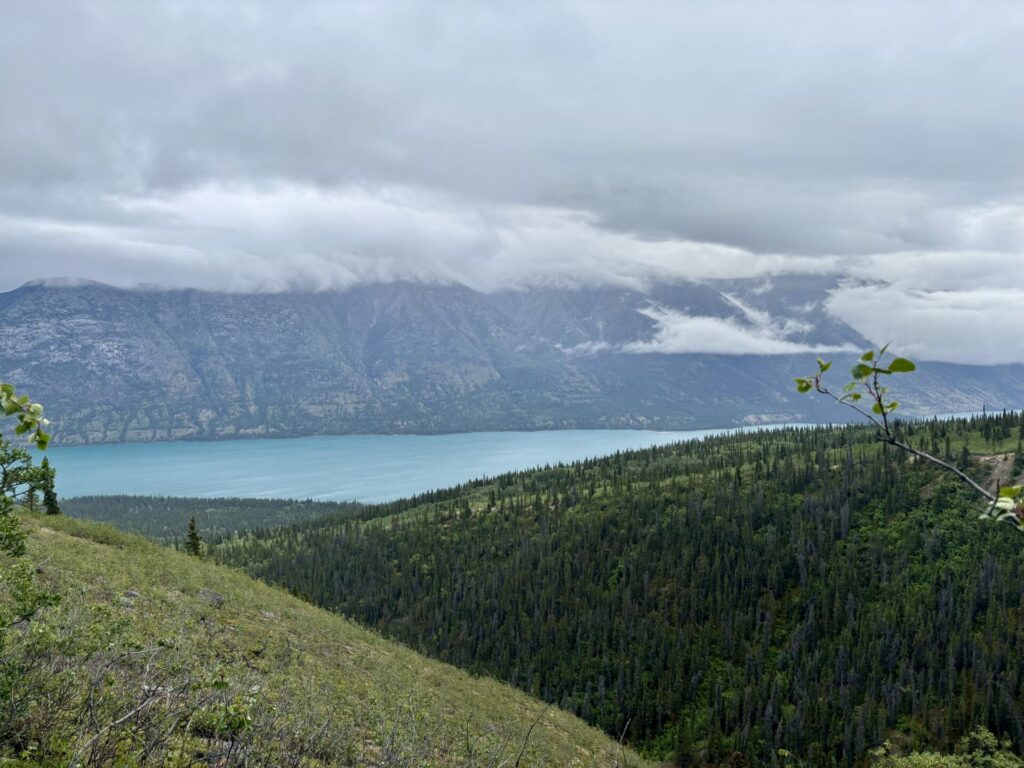
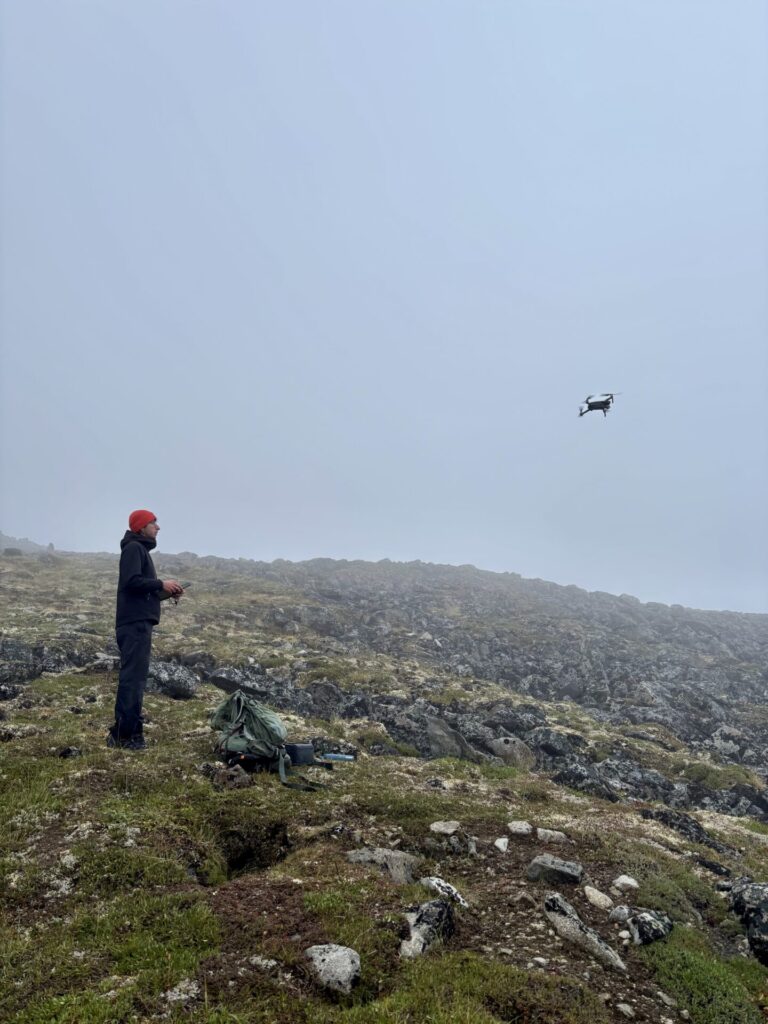
Last August I had the opportunity to join my supervisor Isla and her research team based in Canada for a fieldwork season in the Yukon. This trip allowed me to learn a great range of methods and field techniques that ecologists and biologists use for their research. I gained a lot of experience working with skilled scientists, and I had the opportunity to enjoy breathtaking landscapes and secluded study sites. I had the occasion to fly drones as part of conservation research which provides me with great experience for my future PhD work, and I learnt more about the organisation behind a field season in the Arctic. I am very thankful to SENSE for allowing this incredible fieldwork trip, it will remain an unforgettable memory!

Grégoire Canchon

SatSchool Goes Global: SENSE Student Initiative Featured on International CEOS Platform

SatSchool, the Earth Observation outreach initiative, has achieved international recognition after its educational materials were adopted by the UK Space Agency (UKSA) for the Committee on Earth Observation Satellites (CEOS) Youth Hub. This global platform aims to inspire the next generation of climate scientists and Earth Observation experts.

Founded by SENSE PhD students, SatSchool develops free learning resources to teach school pupils about Earth Observation and its vital role in monitoring our planet. The inclusion of these materials on the CEOS Youth Hub places this student-led work on a global stage, making the resources accessible to a worldwide audience of young learners.

The collaboration began after Patrick Gibson, the Earth Observation Climate Lead at UKSA, saw a presentation by the SatSchool team at a SENSE event. Impressed by the quality of the outreach, UKSA initiated discussions to feature the materials as part of their CEOS chairmanship activities. In an email sharing the news, Beth Greenaway from the UK Space Agency celebrated the launch, noting that the students’ ‘work has real impact globally now!’

Leam Howe, current chair of the SatSchool team, commented on the achievement:

“We are absolutely thrilled to see the workshops and resources we’ve developed being shared on such a prestigious international platform. This journey started with an opportunity to present our work within the SENSE community, which directly led to this fantastic collaboration. It showcases the incredible value of student-led projects and the supportive environment within our training programme.”

This achievement underscores the quality and real-world impact of the work being done by SENSE students, demonstrating how their passion for outreach can lead to global opportunities.

Get Involved with SatSchool

Building on this momentum, the SatSchool team is looking for new members to join their mission. The upcoming Annual General Meeting (AGM) on Wednesday, 26th November 2025 (13:00 GMT, online) is the perfect opportunity to learn more. A variety of committee and member roles are available to suit all skill sets and schedules.

Students interested in joining can register for the AGM here.
To be kept in the loop and receive the quarterly newsletter, you can join the SatSchool mailing list.

Find Out More

The CEOS Youth Hub: https://ceos.org/youth/
SatSchool’s Website: https://satschool-outreach.github.io/


ESA Science Hub Challenges September 2025

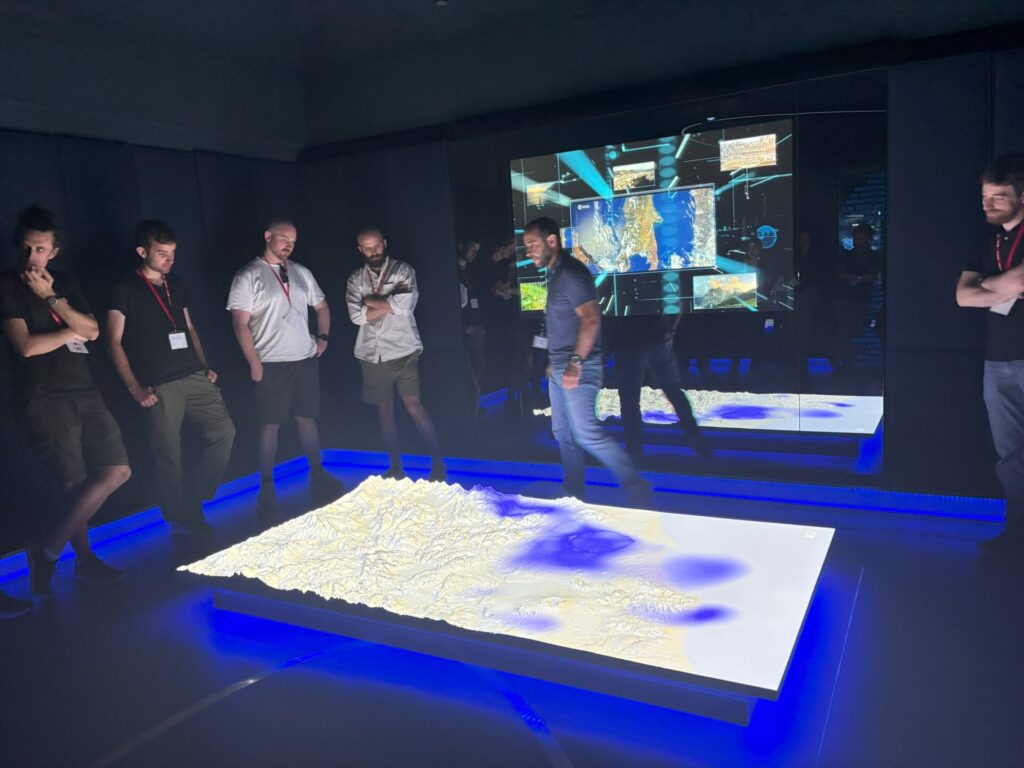
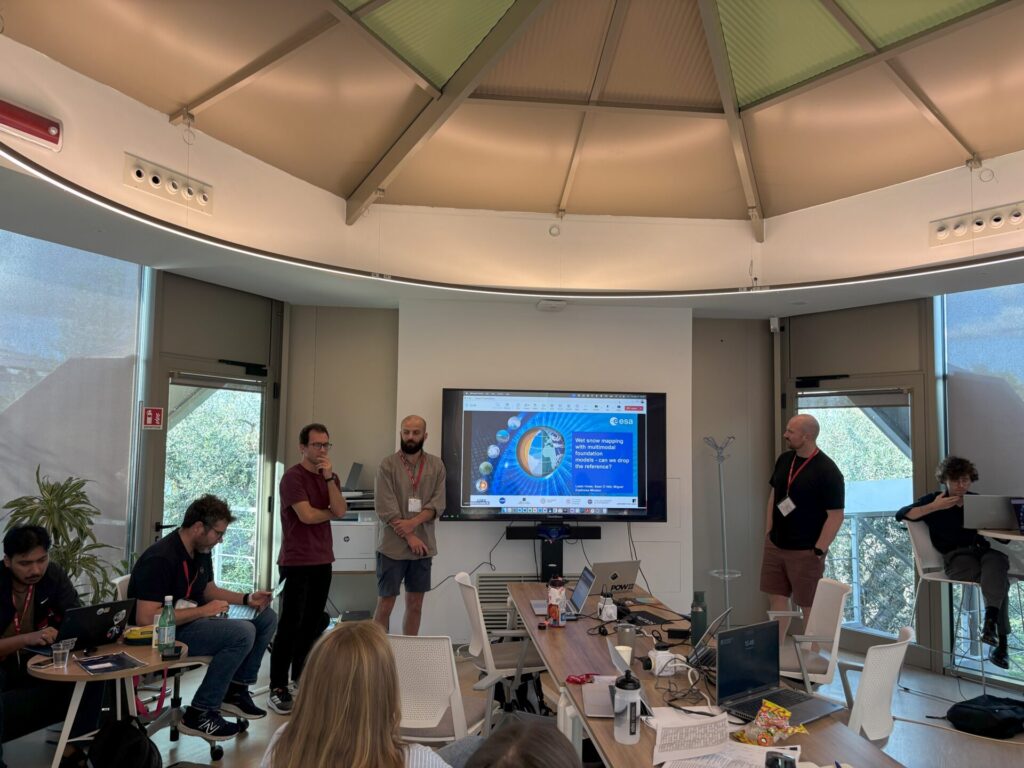
Earlier this September, SENSE students from the Universities of Edinburgh and the University of Leeds joined peers from the University of Venice for the latest ESA Science Hub Challenge, hosted at ESA’s ESRIN facility in Frascati, Italy.

Across four days, students explored cutting-edge Earth Observation science through expert talks, collaborative projects, and visits to ESA’s Φ-Lab. Working in teams, they tackled scientific challenges on topics ranging from aerosols and clouds to ocean monitoring, snow and ice, and glacier change — using ESA’s advanced data platforms to develop solutions in a short time frame.

The event provided a valuable opportunity for SENSE PhD students to network with European peers, gain direct insights from ESA scientists, and contribute to ongoing research efforts. Many of the projects will continue to evolve, with student outputs planned for publication on the ESA–NASA–JAXA Earth Observation Dashboard.

We are proud to see SENSE students taking part in this exciting initiative, showcasing the importance of collaboration and innovation in environmental data science.

Read more here: Science Hub Challenges: September 2025 – ESA Science Hub


Previous Science Challenges editions:

A week of collaboration and discovery at the Science Hub with University of Edinburgh and University of Leeds – ESA Science Hub

3rd Earth System Science Challenge – ESA Science Hub

Conference Poster Prize


“The Channel Network Conference gathers mathematicians and statisticians to discuss latest methods for biometric applications. At the tenth iteration, around 100 participants gave talks, keynotes and short courses covering new approaches in Bayesian, machine learning and parametric methods for as many fields: e.g. medicine, farming, natural resources and ecology. The hosting University of Liege is definitely worth a visit as well. For my poster presentation on how forest structure is influencing the biomass-backscatter relationship, I was awarded the conference prize”.

– Lennart Hoheisel

We would like to thank our funder the Natural Environment Research Council for supporting our student in his PhD journey.

ISRSE40 by Reason Mlambo

Reason Mlambo, our Edinburgh PhD student in GeoSciences, recently attend ISRSE40 in Farnborough, and here are his main take aways from the conference. In Reason’s own words:

“Attending the 40th International Symposium on Remote Sensing of Environment (ISRSE40) was a really insightful experience. The event brought together experts from academia, industry, and government, all focused on how Earth observation (EO) technologies are shaping our understanding and management of the planet. The academic sessions were quite enlightening, and covered a wide array of EO applications—from monitoring crops to urban planning and mitigating climate change. Another highlight were the panels – notably the ones on EO’s role in sustainable development. It’s clear that EO technologies have a big part to play in helping us achieve sustainability goals. The discussions were broad, touching on everything from technical issues, societal impacts as well as ethical implications of deploying EO technologies in the era of AI. These exchanges underscored the pivotal role EO data has in informed policymaking and efficient resource management. I particularly enjoyed the mentoring sessions which took place every day during lunchtime. During these sessions I had the privilege to meet experienced professionals in the EO sector, who shared career advice, industry trends, and their own experiences in the field. A recurring theme throughout the conference was the underutilisation of EO data. Despite the vast amounts of EO data being collected “… only about 3% is actually being meaningfully utilised”. It was noted that there’s a real chance here for the EO community to step up and show how this data can be better leveraged across different sectors.

I also made a quick stop at the Farnborough Space Show, which was taking place concurrently with the conference. It was exciting to see what’s new in the space sector, with companies showcasing the latest in satellite technology and data analytics. Events like these give a great peek into future possibilities in EO and related fields. Overall, the conference and the space show were packed with learning and networking opportunities. I also came away with valuable insights on how I could enhance my own PhD project.”

We would like to thank our funder the Natural Environment Research Council and Reason’s supervisor, Gary Watmough, for supporting our student in his PhD journey.

SENSE BAS Networking Day 2025

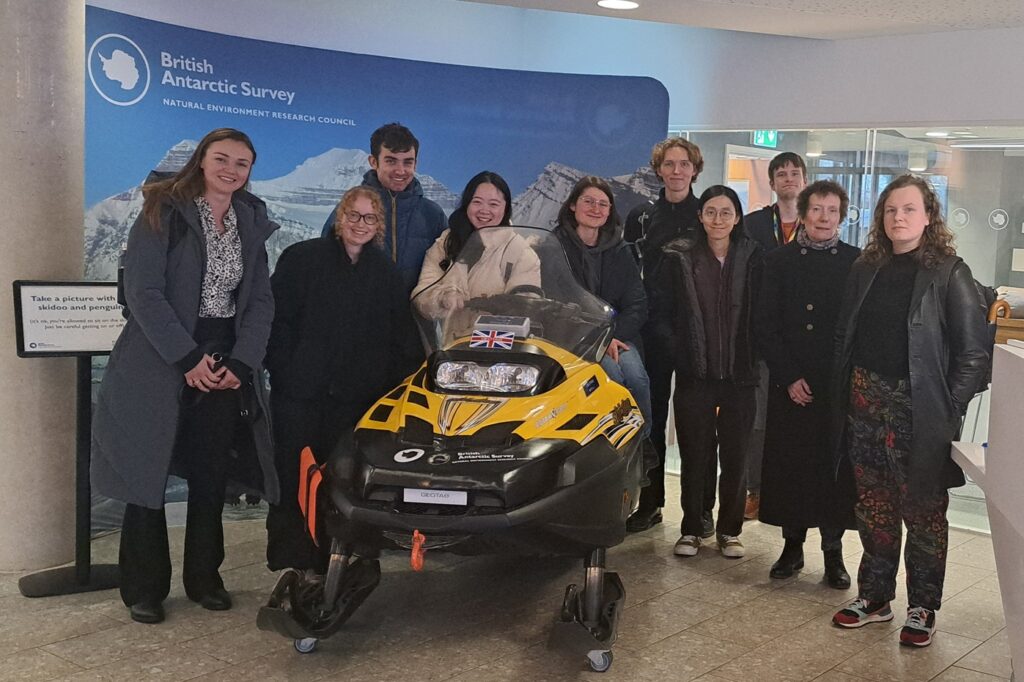
On Wednesday 19th February, at the invitation of our colleagues from the British Antarctic Survey (BAS), we spent the day visiting our partner’s headquarters in the city of Cambridge. The day began with a presentation summarizing the work currently underway at BAS including hosting doctoral students under various landscape and focal awards, advanced training fieldwork in the polar regions and an overview of what lies ahead for BAS and its polar operations in the near future. Our students learnt about a SiCLING project (weird fluffy stuff – no pun intended) and on the logistics and environmental challenges when building on the Rothera Research Station. More on the ongoing construction project aiming at modernizing the UK’s largest research and operations hub in Antarctica can be found here

We also heard on the local and global effects of climate change and the fascinating work happening behind the scenes when developing reports for policymakers and the UN (IPCC Special Report on Oceans and Cryosphere in a Changing Climate).

Next, we received a presentation on paleoclimate study of the microparticles trapped in ice cores aiming to reconstruct past environmental changes and had a glimpse of the Antarctic sea floor ecosystems. 

In the second part of the day, we heard from SENSE students and their counterparts based in BAS on their latest findings and the progress they’re making in their respective research fields. Not only did they have an opportunity to showcase their public speaking skills (we are well impressed!) but more importantly, to shine a light on the topics they are passionate about – true scientists in the making.

Last but not least, we had a unique opportunity to tour two of the research facilities at BAS: the Mission Control room and the Herbarium. In the state-of-the-art Mission Control room our students journeyed to the Antartic, even if only virtually. In the Herbarium, hosting over 40,000 plant specimens from the polar and sub-polar regions, the students observed how the professionals organize the vast collection of plants and manage data. Seeing the inner workings of both facilities and interacting with researchers and technicians throughout the day, gave the visitors an excellent insight into the important work taking place at BAS and was an eye-opening experience with valuable takeaways.

We know how much our students value opportunities to network with like-minded individuals. We trust that the visit to BAS led to interdisciplinary collaborations, fresh perspectives, and constructive feedback, and hopefully elevated the quality of our students’ research.

The visit wouldn’t be possible without the support of Andrew Fleming, Ali Teague, and our two wonderful students Katie Lowery and Luisa Aviles Podgurski. A special thank you note goes out to our funder, the Natural Environment Research Council.

Viva success: Dr Phoebe Hudson

Congratulations to Phoebe Hudson who successfully defended her PhD thesis: “Freshwater Variability in the Arctic Eurasian Shelf Seas: Satellite Sea Surface Salinity and Inter-Annual Variability to Predict Arctic System Change”.

The panel of examiners was very impressed with Phoebe’s depth of knowledge and enthusiasm in discussing her topic.

A special thank you note goes out to Phoebe’s supervisors, Dr Adrien Martin, Prof. Simon Josey, Dr Alice Marzocchi, and both examiners, Dr Encarni Medina-Lopez and Dr Nicolas Kolodziejczyk.

We can’t wait to hear about what’s next for Phoebe. Stay tuned!

A trip to the Netherlands

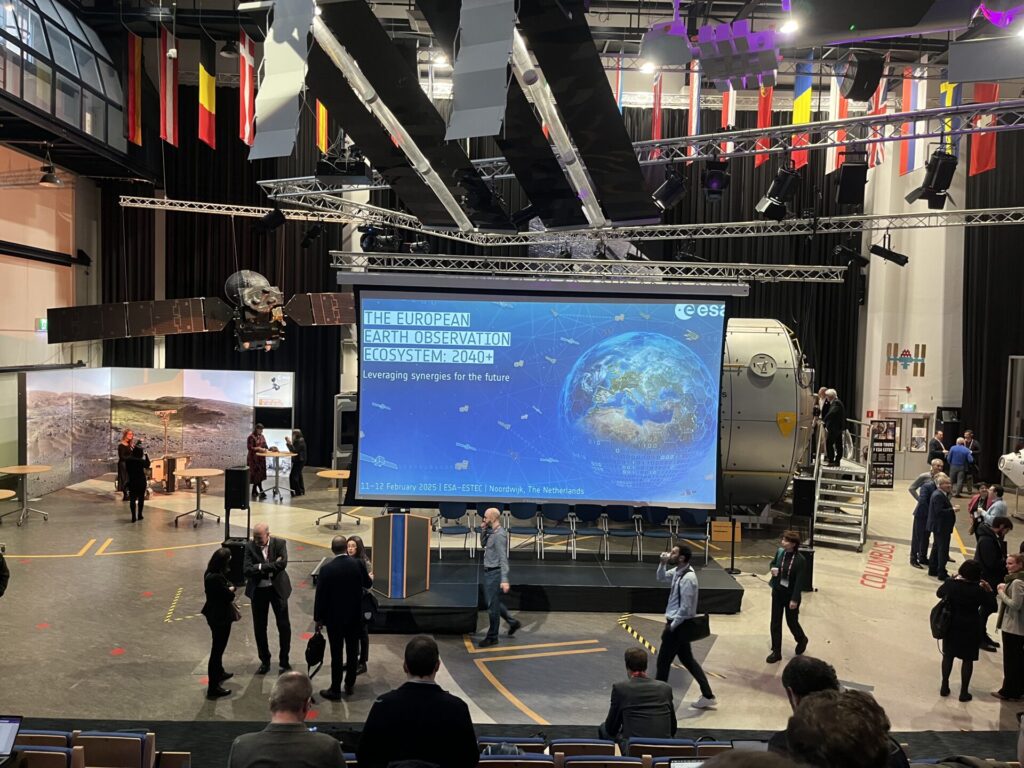
Between 11th and 12th February, 7 SENSE students participated in the ESA ESTEC workshops on the future of Earth Observation in 2040+

The workshops provided insights into EO policy, long-term strategies, and industry challenges, broadening our students’ perspective beyond academia and sparking career-related inspiration.

Interacting with experts and learning about ESA’s initiatives encouraged our students to seek future collaboration opportunities and pursue further engagement with the EO community.

For those nearing the end of their PhDs, the knowledge gained was particularly relevant to job applications and interviews, demonstrating a broader understanding of the EO landscape.

Our students valued the chance to connect with leading figures in the EO field, including ESA decision-makers and industry professionals. New connections have been formed by some that could potentially shape their future careers – fingers crossed!

Attending as a group was beneficial, offering mutual support in networking and the opportunity to collectively provide meaningful feedback to ESA on important EO strategy topics. Here are some of the thoughts shared by our students with ESA on the proposed European Blueprint for Earth Observation:

  • Accessibility and usability of EO data, ensuring inclusivity for researchers with varying technical expertise
  • ESA’s Zero Debris commitment, focusing on enforcement and international policy coordination
  • Resilience and redundancy in EO missions, emphasizing the need for continuity strategies
  • Training development, particularly in cloud computing and emerging data formats
  • Outreach and policy engagement, advocating for stronger EO awareness among policymakers and the public
  • Inspiring the next generation of EO scientists through school engagement and curriculum integration
  • Ethics, data governance, and misinformation, addressing privacy concerns and AI transparency
  • Improved communication and fostering better community interaction.

The students’ valuable comments, based on their experiences of using ESA EO data, was well received, and is being directly fed into the mission requirements for the Next Generation of Sentinel missions.

Students greatly appreciated the financial support and encouragement from SENSE, which made their participation possible and eliminated financial barriers.

A special thank you note goes to Kathy Whaler and Christine Gommenginger for their valuable input and guidance offered to the students before their trip, and to the Natural Environment Research Council and the European Space Agency.

Congratulations Dr Bryony Freer!

Bryony joined NERC SENSE CDT on 1st October 2020 and completed her PhD at the British Antarctic Survey (BAS) as a University of Leeds registered student. Her research focused on the use of satellite altimetry to improve understanding of the dynamics of Antarctic grounding zones, supervised by Dr Oliver Marsh, Prof. Anna Hogg and Prof. Helen A. Fricker.

The Sir David Attenborough ship floating on an iceberg filled ocean. Photo credit: Drone picture taken by Joe Laurance

Bryony was awarded her PhD in July 2024 and—just three days after her viva—joined the RRS Sir David Attenborough on her maiden voyage to the Arctic. During the 6-week KANG-GLAC cruise to the fjords of south-east Greenland, Bryony was part of the physical oceanography team. Her responsibilities included running CTD casts to measure ocean properties in and around the fjords, and processing the continuous weather, oceanographic and seafloor data collected by the ship’s instruments. The primary goal of the cruise was to gather data to better understand the interactions between the flows of warm water into the fjords and rates of glacier melt, and the resulting impact on marine productivity, sedimentation and nutrient cycling.

Bryony and colleague stood on the ship with CTD being lowered into the ocean in the background. Photo credit: Bryony Freer.
Polar bear walking on sea ice floating in the ocean. Photo credit: Bryony Freer.

A highlight of the cruise (alongside seeing polar bears and orcas for the first time!) was Bryony’s coordination of a live ‘Meet the Scientist’ workshop. This interactive session, organized in collaboration with SatSchool and Dynamic Earth, reached over 4,000 pupils across Scotland, offering them a first hand glimpse into life as a polar scientist. The event also featured a video Bryony created to showcase the team’s activities during the research cruise, which you can watch here: 

Video about Greenland at Bryony’s meet the scientist workshop.

In October 2024, Bryony took the next step in her career by moving to San Diego to start a Schmidt AI in Science Postdoctoral Fellowship at Scripps Institution of Oceanography. This two-year fellowship allows her to continue her pioneering research on Antarctic grounding zones, benefiiting from advanced training and application of artificial intelligence methods. 

Bryony stood by the Scripps Institution of Oceanography sign.

To learn more about Bryony’s work, check out her two PhD publications in The Cryosphere and Journal of Geophysical Research: Earth Surface.

SENSE Writing Retreats

Following the success of our writing retreats in early 2024, we recently arranged for a couple more for our students with great success. Our students had the opportunity to dedicate some time to focus on writing. The retreats included mindfulness and stretching sessions, walking/running/tennis activity sessions and optional evening yoga. Our students had an excellent time and even met some friendly llamas on a chilly Yorkshire morning.