University of Edinburgh logo British Antarctic Survey logo National Oceanographic Centre logo University of Leeds logo

New collaboration with Pentland Land Managers Association

Congratulations to SENSE student Lucy Wells who is part of a group at the University of Edinburgh who has received funding for an industrial collaborative project with Pentland Land Managers.

The PLMA is a group of farmers and land mangers representing over 80% of the Pentlands regional park area, working across farms to share knowledge and resources to fight climate change and biodiversity loss on a landscape scale while keeping the Pentlands accessible to the public. Six of the PLMA’s farms are working together to create a combined land management scheme, with an initial focus on carbon sequestration, water quality, and natural flood management. 

Lucy will be working on the first part of the project which will be using sentinel-2 data preprocessed by the EPCC (Edinburgh Performance Computing Centre) and machine learning techniques to make a first baseline of land use in the Pentlands, with Dr Torben Sell in the School of Mathematics. The second part of the project will then use this to explore how land use changes affect flood management. 

This funding came out the School of Geosciences participations in the AIMday Digital Frontiers, organised by Edinburgh Innovations. AIMday® (Academic Industry Meeting day) is based on workshops where challenges submitted by participating companies around a central theme are discussed with academics from relevant university disciplines. Read more about the AIMday Concept. We are very grateful to Stuart Simmons Head of Business Development & Innovation, in the School of GeoSciences for helping Lucy with this opportunity.

Lucy is a 4th year SENSE student at the the University of Edinburgh who is supervised by Professor Casey Ryan. Lucy’s PhD project is ‘The response of savannas and dry forests to global change: disentangling the effects of climate change, land use and changing CO2 using radar remote sensing and fieldwork’.


SENSE ‘Big Data & Satellites’ Training: 18 – 22 March 2024

18 March – 22 March 2024

The SENSE CDT is running a training course on ‘Big Data & Satellites’ from 18 – 22 March, in person, at the University of Leeds. We are delighted to be able to invite up to 10 UK based PhD students to apply to attend. 

Successful applicants will join the NERC SENSE CDT PhD students on the training, providing an excellent opportunity for PhD students across the UK to network. The SENSE CDT is on satellite data in environmental science, from which most of the examples will be taken.

The teaching week is a mixture of theory followed by practical exercises, keynote speakers, and transferable skills development.  At the end of the week, attendees are placed into groups and work on a group project to work, which will require them to apply the skills they have gained earlier in the week.  The groups will present their work back to a small panel of experts in the field on the Friday.

Schedule

Timeampm
MonThe role of the tropics in carbon and water cycles Remote sensing tools to monitor land surface change & land vegetation functioning Advanced GEEAdvanced GEE – practical iCASP – translating research into applications
TuesJasmin TrainingJasmin Training
WedWeather and climate prediction for Africa: Confronting models with observational data Introduction to group work activityGroup work Who wants to be an Earth Explorer mission PI?
ThursSpace Weather Group workGroup work
FriGroup workGroup work presentations

Details

The course is free to successful applicants and overnight accommodation will be provided, Monday – Thursday.  However, attendees will need to book their own travel and cover their travel and subsistence costs whilst on the course.
Tea, coffee and refreshments will be provided during morning and afternoon breaks.

Students will be required to bring their own laptops.  Information will be given prior to the training on any software downloads required.

The training will take place, at the University of Leeds, National Centre for Atmospheric Science, Fairbairn House, 71-75 Clarendon Rd, Woodhouse, Leeds LS2 9PH.

Attendees are expected to attend all sessions.

Pre-requisites

Applicants must be:

  • in the first or second year of their PhD studies
  • studying in an associated field, with a strong mathematical and computing background
  • able to demonstrate that the training is relevant to their PhD research and is unavailable at their home institution.

How to apply

Applicants need to complete the following form https://forms.gle/vDbmE6gEzyZswPjn6

The deadline for applications is 1 January 2024 (23:59)

Successful applicants will be informed shortly afterwards.

For informal enquiries please contact [email protected]

Research Experience Placement – Roy Schumacher

What are you studying?

I am studying Physics on a 4 year integrated masters programme at Durham University. I have just completed my second year.

Roy Schumacher stood in a field with mountains behind him.

Tell us a bit about the project you have been working on this summer?

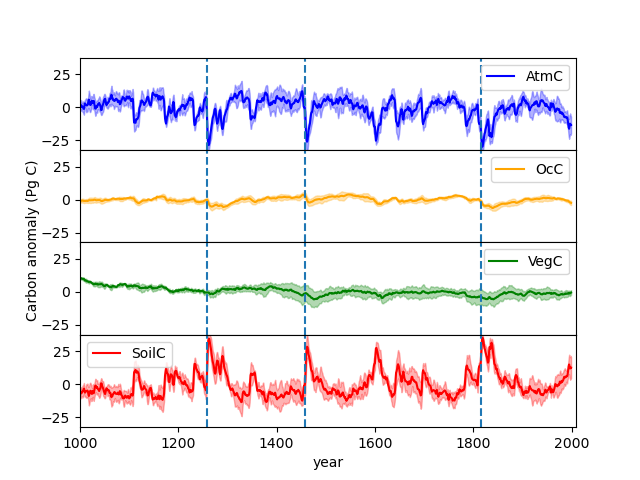
My project was in climate modelling, using a model called FAMOUS. The model developed around the year 2000 and is quite low-resolution. The goal of my project was to see whether the model of the carbon cycle in FAMOUS would accurately respond to volcanic eruptions.  To do this we ran simulations over the last 1000 years with simulated volcanic eruptions and looked at how FAMOUS responded to those eruptions. We then compared that data to literature results from similar simulations with other climate models and the ice core CO2 record. We found that while the general prediction (increased carbon storage in the soil leading to a drop in CO2 directly following an eruption) was in line with other results, FAMOUS seemed to be overestimating the magnitude of the change.

Plot of carbon anomalies from soil, vegetation, oceans and atmosphere 1000 to 2000. Produced by Roy Schumacher.

What new skills have you learned while doing this internship?

I would say that I have learned and further developed various skills during this internship. A lot of them are related to computing; for example, using the Unix shell command line interface or improving my data analysis in Python. On top of that there are some more general skills I practised, like working independently or giving presentations for instance.

How have you found working with your research team?

I really liked working with my supervisor (Prof. Simon Tett), as he was very willing to help and generous with his time. I am also very grateful for getting the opportunity to attend the weekly discussions of the wider research group he was part of (The Contemporary Climate Group). It was very interesting to hear about what research other people were doing and listen to the academics discuss amongst each other. Finally, I was also lucky to start on the same day as another REP (NERC) student whose project had similarities to mine and so we were to discuss various aspects of our work.

What has been the highlight of the internship for you?

My personal highlights were the social events organised by SENSE. I enjoyed meeting the other interns and hearing about their experiences. It was also interesting to listen to the PhD students to get some advice and a better idea in general of what it is like to do a PhD.

How has doing this internship changed your plans or thoughts about your future career?

Before this internship I had thought of a career in Climate Science as an option but would have been uncomfortable committing to e.g., a PhD or even a Masters in the field, as I had no idea of what it would be like, coming from a Physics background. After doing this internship I could definitely imagine working in Climate Science in the future and it confirmed that I would enjoy working in a research environment.

Research Experience Placement – Charlie Alvey

What are you studying?

I am studying for a BSc in Environmental Science at the University of Leeds.

Tell us a bit about the project you have been working on this summer?

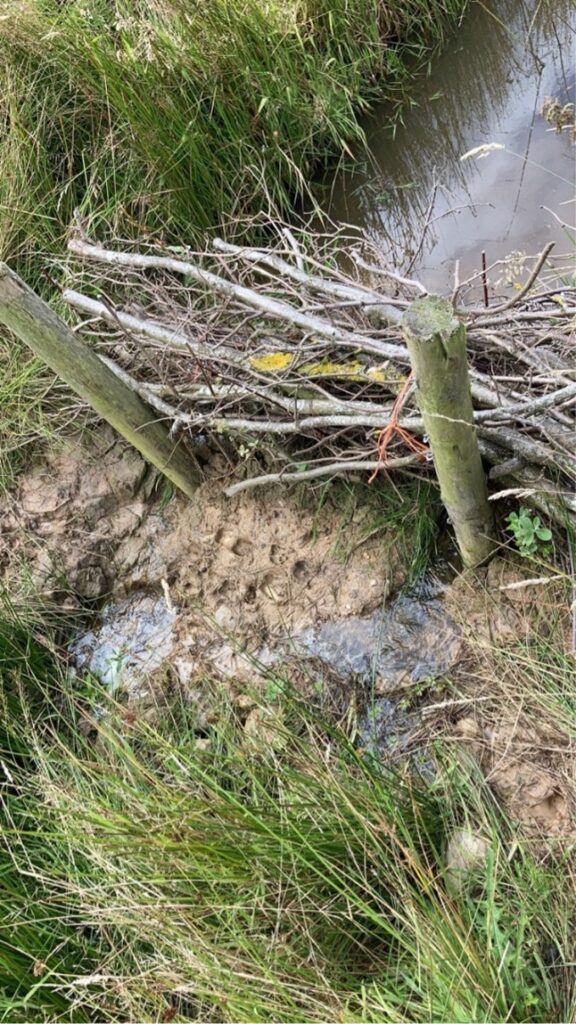
The project aims to trial monitoring and quantification methods on natural floods management practices (NFM’s) implemented at Fountains Abbey in North Yorkshire. NFM’s implemented include leaky dams, pond creation and afforestation, which aim to combat the economic and environmental issues of sediment accumulation and flooding in the Skell valley river catchment.

A wide variety of monitoring and quantification methods were involved in investigating these NFM’s. I hope to contribute to the ongoing research at the Sorby Fluid Dynamics Laboratory to help answer and prove some of the many questions surrounding this project including; ‘ are heavy rainfall events causing increased sediment inputs into the river Skell? ‘ and ‘ has the implementation of  NFM’s substantially quantities of precipitation and subsequently slowing the flow of water into the river Skell across the catchment ‘. All with the end goal of helping to preserve fountains abbey and resolve issues for shareholders involved in the Skell valley catchment.

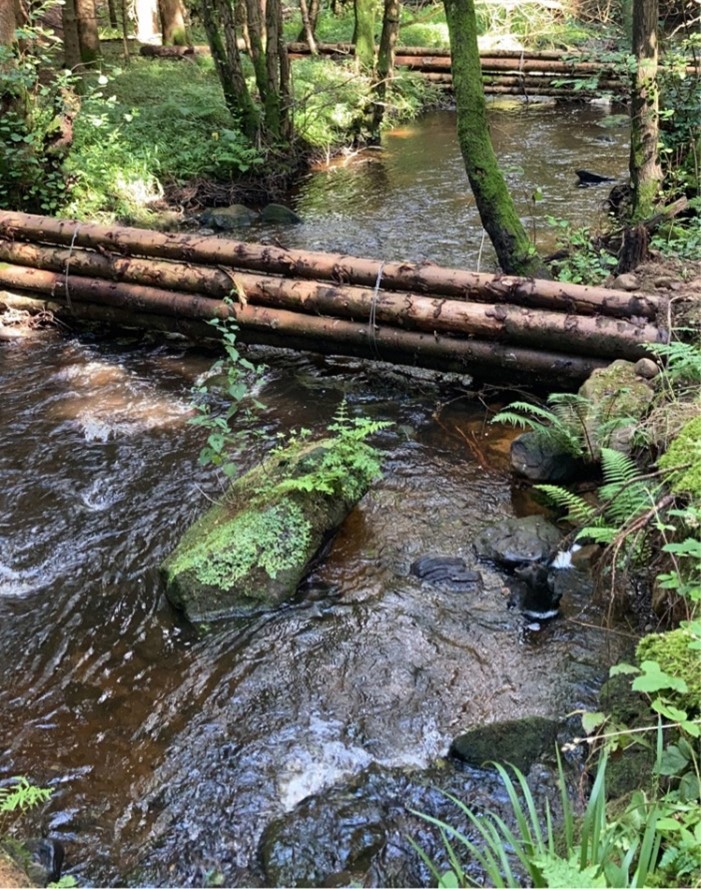
Large Leaky dams implemented on the River Skell.
Small leaky dam on the River Skell.

What new skills have you learned while doing this internship?

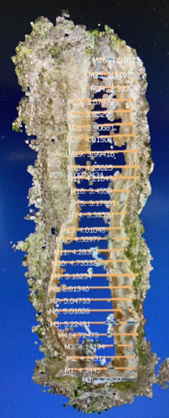
I learned various skills that were both specialised to the field of data science and practical transferable skills for any workplace. I developed various specialised data science skills. Including learning to use software to process data,  where I used MeshLab to quantify LiDAR models that I conducted in the field. I took part in implemented and manging various monitoring methods including; Turbidity and level sensors, weather stations, cameras, level weather stations and pump and volunteer sampling. I did a A2 CofC course so I could be qualified to fly unmanned aerial vehicles to produce repeat photogrammetric models of NFM’s. This will be very useful for future research possibilities as UAV’s are increasingly used in data science. The practical skills I further developed included; communicating with shareholders, extensive planning, time management and teamwork on a large project with multiple organisations operating on a tight time frame.

LiDAR model of part of the River Skell.

How have you found working with your research team?

I found working with my supervisor Dave and his colleagues Gareth and Helena in the Sorby Fluid Dynamics ab, as well as the wider Skell Valley Project, to be thoroughly insightful and informative. They were all generous with their time and knowledge and answered any question I asked about the project and industry as a whole. I am immensely appreciative to have had the opportunity to work alongside these incredibly skilled professionals doing great work.

What has been the highlight of the internship for you?

The highlight of the internship was an interdisplinary meeting at fountains abbey with a wide variety of professionals working within the Skell valley project, which opened my eyes both the extend of the project and also how important data science is to large environmental management projects.

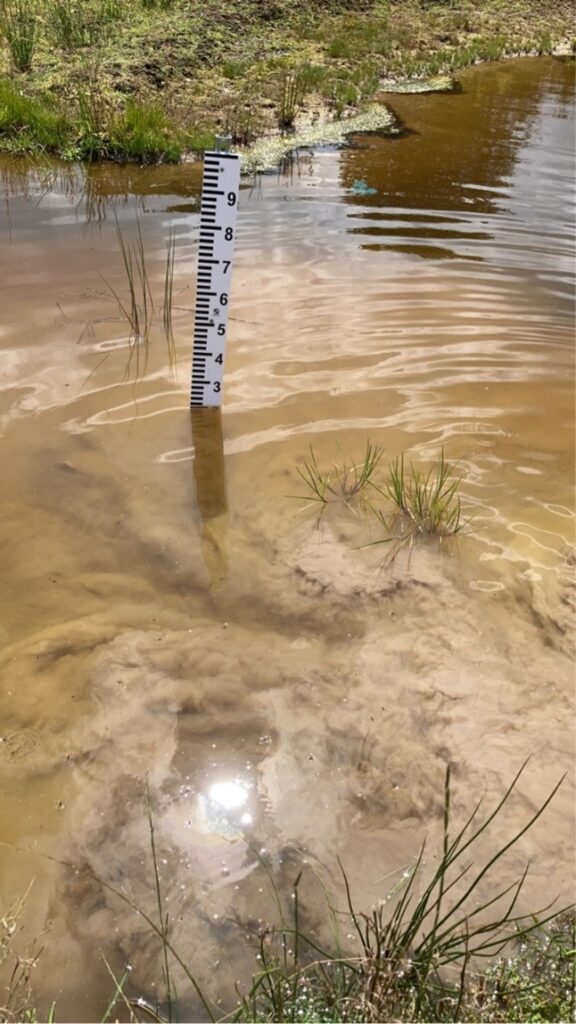
Stream gauge in a sediment filled river.

How has doing this internship changed your plans or thoughts about your future career?

This placement has led me to respect and understand how challenging research projects can be. Nonetheless I would consider taking on one in the future and I am definitely interested in pursuing a MscR after my BSc.

Research Experience Placement – Stephanie Hodnett

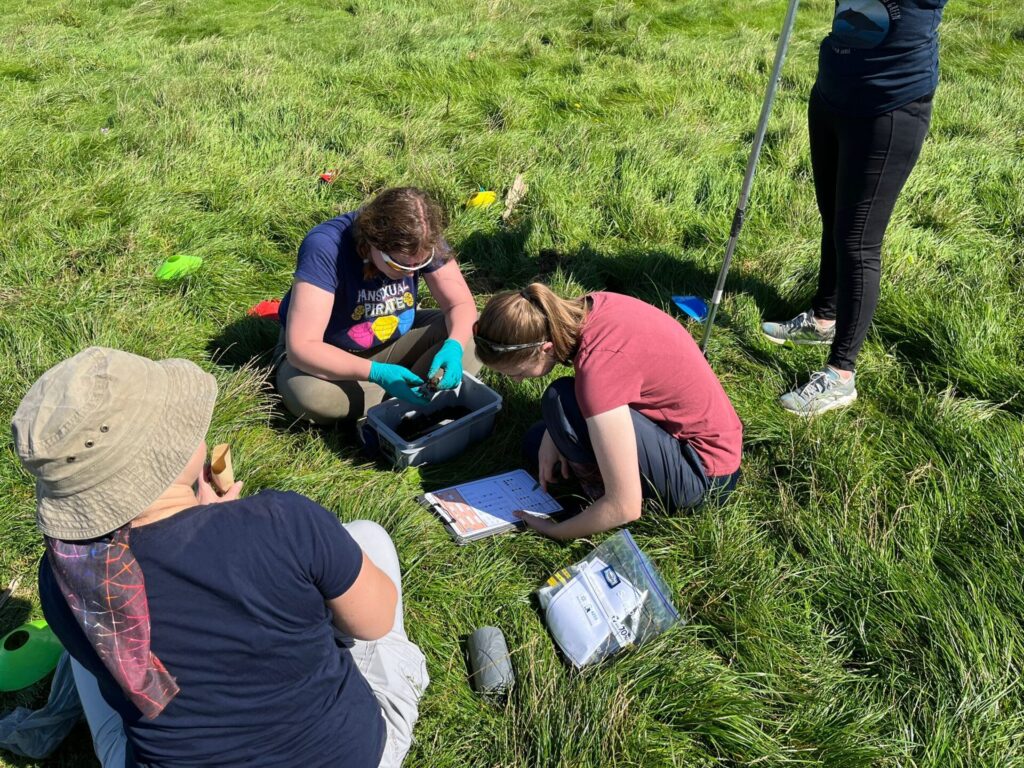
Stephanie and 3 others in a field conducting research.

What are you studying?

I am currently studying for a BSc in Environmental Science at The Open University, as a distance-learning student. I will be starting my fourth and final year in October 2023.

Tell us a bit about the project you have been working on this summer?

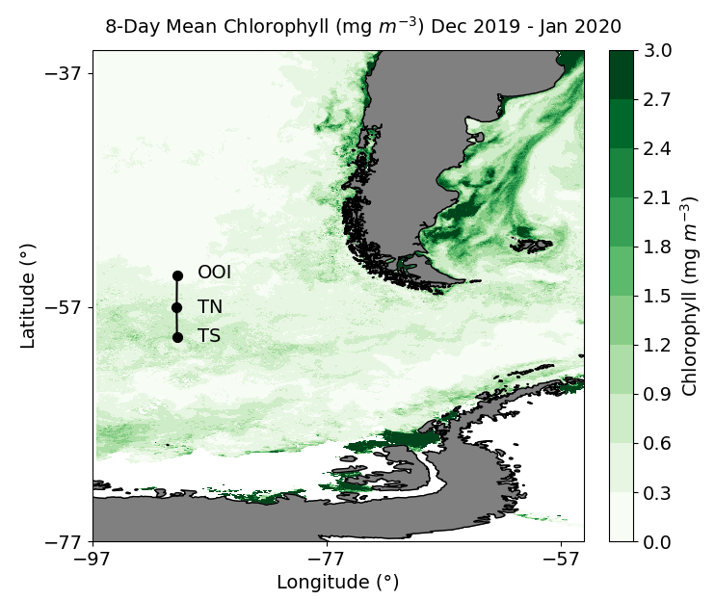
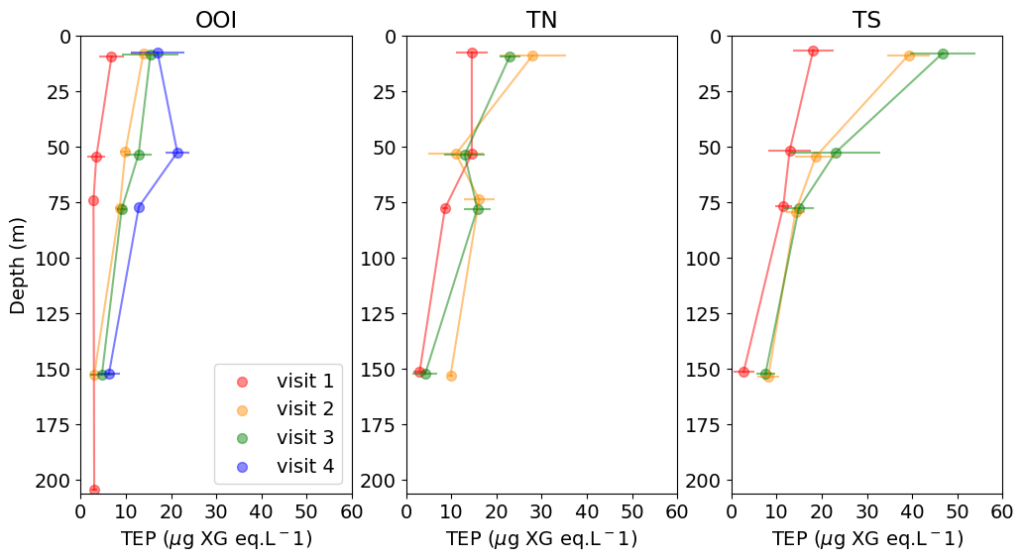
My project investigated how particulate organic carbon (POC) in the Southern Ocean sinks through the water to add to ocean carbon storage, via phytoplankton photosynthesis. This involved analysing in-situ data on particles produced by the phytoplankton that promote carbon sinking to the deep ocean. I also used chlorophyll data from the ESA Ocean Colour satellite dataset, to help answer my main question of how the whole process was affected by nutrient availability in the water. The findings will hopefully have implications for researchers involved in the CUSTARD project, who are investigating seasonal changes in Southern Ocean carbon storage.

What new skills have you learned while doing this internship?

During the internship, my IT and data analysis skills definitely improved, such as learning about and using Linux operating systems, and coding using a Python environment – something which I had never used before. I have developed my presentation skills, by presenting to other placement students and research scientists at the National Oceanography Centre (NOC) where I was based, which also taught me how to target a talk to different audiences with different knowledge bases. The soft skills I have learned and used involved problem-solving, time management and building work relationships, by communicating with my supervisors and speaking to other people in the office. I also developed a good working day routine to make the most of my time, which is some helpful personal insight I will use in future.

Map of 8 day mean chlorophyll from December 2019-January 2020 covering the Antarctic Peninsula and South America. There are high concentrations along the coastlines.
Plot of chlorophyll levels against the depth (down to 200 m).

How have you found working with your research team?

From the outset and throughout the internship, my supervisors Alice and Chelsey were incredibly welcoming and attentive to any questions I had (which, for the first week, were mainly about how to find my way around the NOC building!). They offered me many opportunities to attend talks, speak to people, get involved with data collection and public engagement, and generally gain a huge amount of insight into the academic industry, for which I am very grateful. I massively appreciated their consistent time and support, particularly when they were both busy with their own work, and it was inspiring to work with and learn from them.

What has been the highlight of the internship for you?

The highlight was definitely my fifth week, where I presented to the other REP interns in Edinburgh and Leeds online, and then to 20 or so researchers at NOC later that week. It was fantastic to see what the other interns had been working on, and grow in confidence when presenting to researchers who are experts in their fields.

How has doing this internship changed your plans or thoughts about your future career?

The internship has reaffirmed to me that I want to pursue a career in earth science research, as I found the whole project process very interesting. It has also highlighted the potential challenges that arise with it, which I am glad to be aware of. I definitely plan to conduct a PhD research project, and will likely study for a masters in oceanography or similar first.

SENSE ‘EO of the Cryosphere and Solid Earth’ Training: 11 – 15 March 2024

11 March – 15 March 2024

The SENSE CDT is running a training course on ‘the Cryosphere and Solid Earth’ from 11 – 15 March, in person, at the University of Leeds. We are delighted to be able to invite up to 10 UK based PhD students to apply to attend. 

Successful applicants will join the NERC SENSE CDT PhD students on the training, providing an excellent opportunity for PhD students across the UK to network. The SENSE CDT is on satellite data in environmental science, from which most of the examples will be taken.

The teaching week is a mixture of theory followed by practical exercises, keynote speakers, and transferable skills development.  At the end of the week, attendees are placed into groups and work on a group project to work, which will require them to apply the skills they have gained earlier in the week.  The groups will present their work back to a small panel of experts in the field on the Friday.

Schedule

Timeampm
MonOverview of EO of the cryosphere
Sea ice EO techniques
Sea ice freeboard practical
Sea ice freeboard practical contd.
Keynote: Advances in cryosphere research over the last 30 years
TuesSurface elevation change from altimetry
Ice Velocity theory & practical
Ice velocity practical contd
Keynote talk: Advances in cryosphere research over the last 30 years, Andrew Fleming, BAS
WedOverview of EO for volcanoes and earthquakes
InSAR for volcanoes and earthquakes
Visible Earthquakes
Interseismic practical work
Keynote talk: 30 years of advances in tectonics, Prof Andy Hooper
ThursVolcanoes & EO science talk
Introduction to group work activity
Group work
FriGroup workGroup work presentations

Details

The course is free to successful applicants and overnight accommodation will be provided, Monday – Thursday.  However, attendees will need to book their own travel and cover their travel and subsistence costs whilst on the course.
Tea, coffee and refreshments will be provided during morning and afternoon breaks.

Students will be required to bring their own laptops.  Information will be given prior to the training on any software downloads required.

The training will take place, at the University of Leeds, National Centre for Atmospheric Science, Fairbairn House, 71-75 Clarendon Rd, Woodhouse, Leeds LS2 9PH.

Attendees are expected to attend all sessions.

Pre-requisites

Applicants must be:

  • in the first or second year of their PhD studies
  • studying in an associated field, with a strong mathematical and computing background
  • able to demonstrate that the training is relevant to their PhD research and is unavailable at their home institution.

How to apply

Applicants need to complete the following form https://forms.gle/vDbmE6gEzyZswPjn6

The deadline for applications is 1 January 2024 (23:59)

Successful applicants will be informed shortly afterwards.

For informal enquiries please contact [email protected]

SENSE Industry Symposium 1st November 2023

Venue: Prince Phillip Suite, Surgeons Quarter, Nicholson Street, Edinburgh, EH8 9DW

The SENSE Centre for Doctoral Training would like to invite you to a one day symposium involving students, staff and partners of the centre.

The purpose of the event will be:
·       To showcase the work in Earth Observation and environmental science being done by the SENSE Centre for Doctoral Training
·       Explore opportunities for collaboration within the centre.  
·       Network with students, companies, academics and other staff working within the area of EO
·       Explore future directions for research in Earth Observation and environmental science 


Attendance at this event is free however limited to two attendees per organisation.

Please register via Eventbrite:

https://www.eventbrite.co.uk/e/sense-industry-symposium-2023-tickets-658406249817

We look forward to meeting you in November

Dr Gary R Watmough

SENSE Deputy Director for Industry Engagement

SENSE ‘Machine Learning and AI’ Training: 4 – 7 March 2024

4 March – 7 March 2024

The SENSE CDT is running a training course for ‘Machine Learning and AI’ from 4 – 7 March 2024, in person, at the University of Leeds. We are delighted to be able to offer places for up to 10 UK based PhD students to attend. 

Successful applicants will join the NERC SENSE CDT PhD students on the training, providing an excellent opportunity for PhD students across the UK to network. The SENSE CDT is on satellite data in environmental science, from which most of the examples will be taken.

The teaching week is a mixture of theory followed by practical exercises, keynote speakers, and transferable skills development. 

Schedule

ampm
MonMachine Learning AI techniques practical: classification of images, textural descriptionAI techniques practical: contd Keynote: New directions of AI, Prof David Hogg
TuesAgent-based models Introduction to Urban Analytics Urban systems machine learning practical 1/2Urban systems machine learning practical 2/2 “Dos and Don’ts of presenting”, Prof Jurgen Neuberg
WedThe role of ATI and overview of LIDA Unsupervised classification of clouds lecture & practicalUnsupervised classification of clouds summary Keynote: Using science to influence policy, Dr Cat Scott
ThursScientific Machine Learning Using machine learning in EO Alan Turing Institute lecture

Details

The course is free to successful applicants and overnight accommodation will be provided, Monday – Wednesday.  However, attendees will need to book their own travel and cover their travel and subsistence costs whilst on the course.
Tea, coffee and refreshments will be provided during morning and afternoon breaks.

Students will be required to bring their own laptops.  Information will be given prior to the training on any software downloads required.

The training will take place, at the University of Leeds, National Centre for Atmospheric Science, Fairbairn House, 71-75 Clarendon Rd, Woodhouse, Leeds LS2 9PH.

Attendees are expected to attend all sessions.

Pre-requisites

Applicants must be:

  • in the first or second year of their PhD studies
  • studying in an associated field, with a strong mathematical and computing background
  • able to demonstrate that the training is relevant to their PhD research and is unavailable at their home institution.

How to apply

Applicants need to complete the following form https://forms.gle/vDbmE6gEzyZswPjn6

The deadline for applications is 1 January 2024 (23:59)

Successful applicants will be informed shortly afterwards.

For informal enquiries please contact [email protected]

SENSE ‘Earth Observation of the Atmosphere’ Training: 26 Feb – 1 March 2024

The SENSE CDT is running a training course for ‘Earth Observation of the Atmosphere’ from 26 February – 1 March 2024, in person, at the University of Leeds. We are delighted to be able to invite up to 10 UK based PhD students to apply to attend. 

Successful applicants will join the NERC SENSE CDT PhD students on the training, providing an excellent opportunity for PhD students across the UK to network. The SENSE CDT is on satellite data in environmental science, from which most of the examples will be taken.

The teaching week is a mixture of theory followed by practical exercises, keynote speakers, and transferable skills development.  At the end of the week, attendees are placed into groups and work on a group project to work, which will require them to apply the skills they have gained earlier in the week.  The groups will present their work back to a small panel of experts in the field on the Friday.

Schedule

 Morning SessionsAfternoon Sessions
Mon– Welcome from the CDT Director
– Introduction to the atmosphere and NCAS
– EO of the atmosphere
– Satellite observations of clouds practical – MODIS/CLOUDSAT/calypso
– Severe Weather over East Africa
Tues– Overview of weather systems
– Weather forecasting lecture & exercise
– Weather forecasting exercise – contd
– Skills building activity – Imposter Phenomenon
Wed– Tropical Cyclones
– Measuring tropospheric ozone pollution and precursors from space – spectrometry theory
– Sentinel-5p for monitoring air quality practical
– Discovering the Ozone Hole
Thurs– Keynote talk: “Things I learned from 3 decades of atmospheric research” Professor Ken Carslaw
– Introduction to Group project work activity
– Group project work
Fri– Group project work– Group work presentations

Details

The course is free to successful applicants and overnight accommodation will be provided, Monday – Thursday.  However, attendees will need to book their own travel and cover their travel and subsistence costs whilst on the course.
Tea, coffee and refreshments will be provided during morning and afternoon breaks.

Students will be required to bring their own laptops.  Information will be given prior to the training on any software downloads required.

The training will take place, at the University of Leeds, National Centre for Atmospheric Science, Fairbairn House, 71-75 Clarendon Rd, Woodhouse, Leeds LS2 9PH.

Attendees are expected to attend all sessions.

Pre-requisites

Applicants must be:

  • in the first or second year of their PhD studies
  • studying in an associated field, with a strong mathematical and computing background
  • able to demonstrate that the training is relevant to their PhD research and is unavailable at their home institution.

How to apply

Applicants need to complete the following form https://forms.gle/vDbmE6gEzyZswPjn6

The deadline for applications is 1 January 2024 (23:59)

Successful applicants will be informed shortly afterwards.

For informal enquiries please contact [email protected]

Our Firbush Special Guests

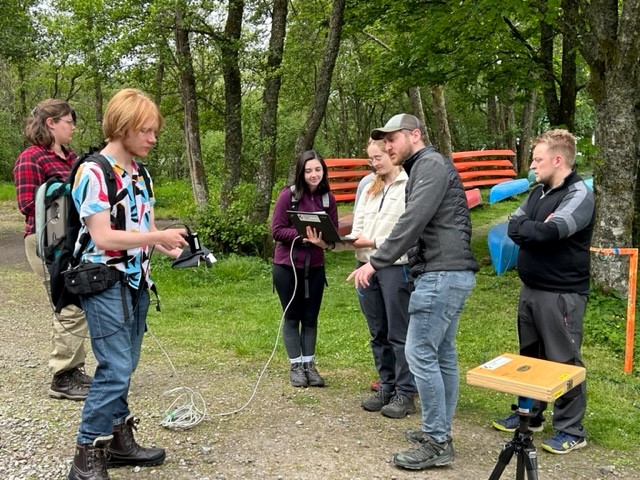
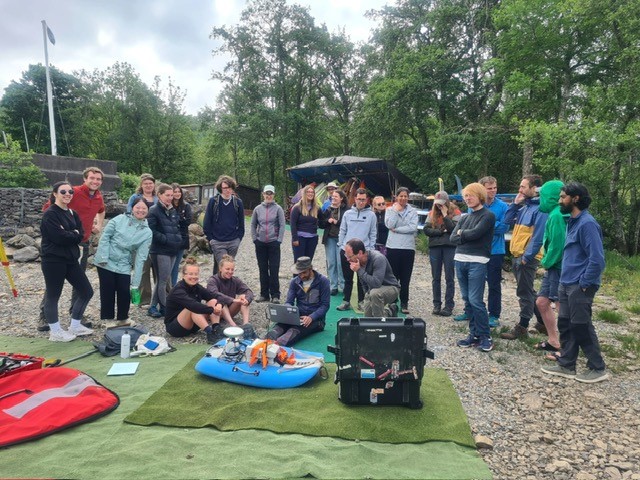
In 2023 SENSE was lucky enough to be awarded Skills Enhancement funding by our funder NERC which will allow us to create some additional opportunities for our own students and also open our current training activities to students outwith the CDT. With our field skills trip to Firbush scheduled for June 2023 we were excited to create this opportunity and a few months before the trip launched an application process for this. We were really lucky to be joined by some excellent PhD colleagues from various universities around the UK.

Estelle Darko is a student at the University of Birmingham whose research is focussed on forest diversity. Estelle was particularly interested in the forest inventory activities as it is directly aligned with her research. She said of the week:

I found the training to be surprisingly useful and quite relevant to my research so I would consider the funding as having been used well. I was also able to meet researchers in my field who go to similar conferences who I may have otherwise not easily spoken to otherwise so it was effective networking.

Fiona Woods is based at the University of Southampton and is looking at native oyster reefs in the Solent. As much of Fiona’s research is based in the lab and in situ measurements she was really keen to expand her knowledge of remote sensing. As well as gaining knowledge of the technical aspects of the training the best part of her week was:

To be Able to meet other PhDs doing completely different research to myself, and how willing everyone was to share their work and ideas

Fiona was also very interested to hear about the NERC Field Spectroscopy facility and how their equipment was available to hire for free and at a low cost.

Ian Willey is based at the University of Leeds and he has recently started a PhD evaluating woodland creation schemes in the UK, Ian is currently exploring different remote methods in his research but keen to find out more about the potential of using satellite data for this. The best thing about the course for Ian was:

Hands-on experience with equipment, approachability and knowledge of staff/demonstrators, the Firbush setting itself together with the food, structure of the day and facilities. Beyond this, doing activities with other PhD students and having dinner with them everyday helped discussion and created bonds which are great for learning.

Anna Stanforth is also based at the University of Southampton and working on a assessing ecosystem services from local to landscape scale to improve agricultural sustainability and productivity in Papua New Guinea. Anna was really keen to pick up some field techniques and pick up some tips and tricks before heading in the field herself.

My own DTP does not offer anything near this training and therefore being able to tag onto another training course was invaluable. It also helped with networking and generally getting out of my own PhD environment which can easily become a bubble.

Nitin Ravinder is based at CPOM at the University of Leeds working on Detecting Ice Sheet Dynamical Imbalance using Satellite Altimetry and was keen to gain experience of drone flying before potentially taking part in some field campaigns on ice sheets.

Firstly, a big thank you to NERC for the funding and hence the opportunity. Most of the training was a first experience for me. I learnt quite a lot about field work, the kind of planning that goes into one, the kind of adaptability required for completing one, the unexpectedness of it all. I’m hoping to use this knowledge in any future field work opportunity I might get and only build on what I have learnt. I’m confident in being able to take part in field work in more challenging environment that comes with my field of research and I only have this training to thank for it.

Luke Richardson-Foulger is studying at Kings college London looking at  High Latitude Peatland Fires and their Greenhouse Gas Emissions and was keen to gain experience of some of the methods which will be used in his research

Luke particularly enjoyed the drone activities and the ACDP demonstrations and found it very useful to network with other PhDs

Rachel Walker studies at the University of Nottingham as part of the Geospatial Systems CDT and her research focusses on developing a product to assess the success of peat restoration techniques through the integration of geospatial methods and will be using a variety of range of remotely sensed data (hyperspectral, multispectral, InSAR, thermal and lidar) for this.

It was beneficial as my CDT does not offer training on UAV or field spectroscopy and these both directly link to my research. It was also interesting to meet people from the SENSE CDT and elsewhere to find out what they are doing and network.

Safaa’Al Awadhi is based at the School of Geoscience at the University of Edinburgh and is working on Oil spill detection in the offshore marine environment using thermal and SAR remote sensing and was keen to gain techniques to use UAV’s in the safe detection of oil spills. Safaa particularly enjoyed the talks from Calum Hoad and Charlotte Walshaw on their fieldwork experiences>

I liked seeing the PhD students progress and their EO applications in Antarctica and the Arctic. Their talk method had an element of storytelling with lots of  photos and humor which I thought was great.

She said of the week in general:

Thank you for the invitation. As an internationally funded PhD student, it can be isolating not being part of a cohort such as NERC E3 or E4 or SENSE, etc. Being part of the SENSE field training for a week provided some opportunity for shared activities with fellow PhD students and a chance to network with them. I look forward for future similar opportunities.

Thank you to all of those who joined the trip this year – it was great to see everyone getting to know each other and working together in groups. It was brilliant to expand our network and meet new people. Thank you very much to NERC for funding this – we are already making plans for next year’s training and hope to make places available to attend this and other training events.