



University of Edinburgh logo British Antarctic Survey logo National Oceanographic Centre logo University of Leeds logo

SENSE Spotlight – Ashar Aslam

Name: Ashar Aslam

Institution: Institute of Climate and Atmospheric Science, University of Leeds

PhD Project Title: Severe Weather over Southeast Asia
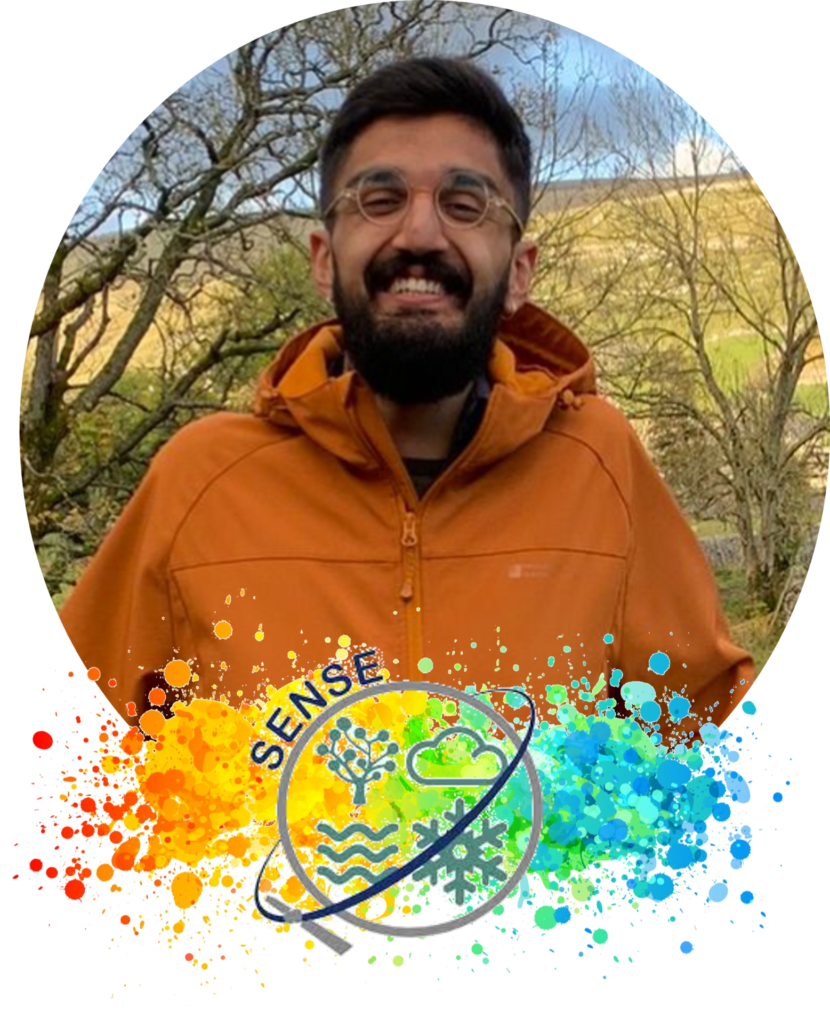
Ashar stood in front of trees and hills within the Yorkshire Dales. He is of Pakistani descent with dark hair, eyes, and a beard, and is wearing clear, circular glasses and an orange raincoat. He is smiling.

What is your background?

I’m a second year PhD student within the Atmospheric and Cloud Dynamics Group at the University of Leeds. My research focuses on improving the understanding of the processes influencing extreme rainfall patterns over the Maritime Continent, another name for the thousands of islands and many shallow seas in Southeast Asia. Prior to starting my PhD, I did an integrated Master’s in Earth Sciences at the University of Oxford. I identify as queer, neurodivergent, BAME (Pakistani heritage) and as someone from a lower socioeconomic background (in no particular order).

From January to March 2023, I have seconded from my PhD to work as one of SENSE’s EDI champions. I have been engaged with EDI and outreach work since I was an undergraduate. This includes development of educational resources for KS3 school pupils, supporting programmes aiming to better understand the barriers of underrepresented groups to geoscience at an undergraduate level, and being a guest speaker at conferences and podcasts related to topics associated with being LGBTQ+, a person of colour, integration within the STEM community, and disproportionate impacts faced by marginalised groups.
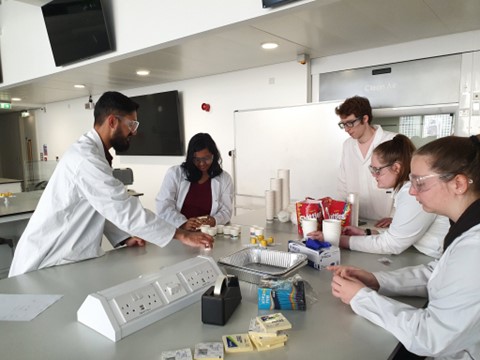
Ashar showing several undergraduate student helpers how to run an outreach activity related to measuring precipitation at the GAIA (Geoscience Access, Inclusion and Attainment) Spring School in 2022. They are all wearing lab coats and safety goggles. There are plastic cups, tape, post-it notes and bags of Skittles on the lab bench, all used in the activity.

Tell us about your project and the area of environmental science you are most excited about

My research background is primarily in geology – during the latter stages of my undergraduate degree however, I specialised in more of the climate, ocean and atmospheric science portions of the course. I’ve always been interested in understanding extreme weather, particularly in the tropics. I stay away from declaring ‘fascination’ in topics such as natural hazards, given the detrimental impacts that communities face as a result. A major pet peeve when it comes to people documenting such events! I am primarily interested in understanding impacts for particularly more socioeconomically deprived regions, where the impacts are likely to be more felt, with climate change, for example, having a disproportionate (and often undeserved impact) on such groups.

I used to work on African climate model data for understanding reasons for biases in the representation of the regional meteorology, such as where you get anomalous rainfall. I now study the many processes influencing rainfall patterns over the islands of Southeast Asia. Such processes include the large-scale environmental field, the diurnal cycle of solar heating (unique to each island) and more transient/synoptic-scale phenomena such as tropical cyclones. As these processes all interact with one another, understanding the complex meteorology is very difficult. Limitations in our understanding mean that there are biases in current climate models because of this. They also mean these biases cannot be addressed without understanding the weather in its fullest form first – talk about a feedback loop! Given 400 million people live in Southeast Asia, understanding the meteorology is beyond important, as they are compounded with impacts such as flooding and landslides, leading todisplacement, loss, poor sanitation, epidemiological crises and death. This is just one of many sets of hazards affecting the region – it is also tectonically active, with earthquakes and volcanic eruptions occurring as well.
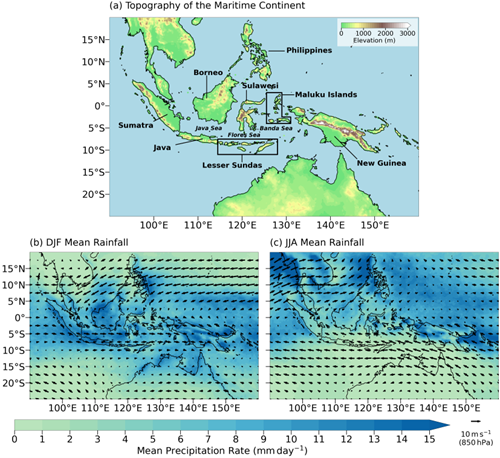
(a) Map showing the topography/elevation of the Maritime Continent, with some of its constituent islands and seas labelled. Panels (b) and (c) show the climatological means of GPM precipitation rates for (b) December-February and (c) June-August, from 2000/01 to 2019/20. Black arrows represent 850hPa (low-level) wind.

Was using satellite data at the core of your PhD project important to you?

Satellite data provides the foundations for my work – given it’s one of the most accessible, and high quality, sources of data, it is of great utility. It also supplements limited observational data, which is a big issue in Southeast Asia, in terms of the spatial distribution and density of meteorological stations, where, for example, radiosondes are deployed for determining atmospheric profiles, and where radars are for determining nearby rainfall distribution. In addition, it can be used in conjunction with models to confirm the presence of certain processes, or if biases exist in our models relative to that of observations, either obtained from the ground or from satellites. Luckily for me, a lot of the data has been pre-processed, so it saves me a lot of time!

Why did you decide to enter the space sector?

I don’t think entering the space sector was at all voluntary – I more or less stumbled upon it and thought, ‘hey great, this is cool’. But it is cool. I covered several space sector/satellite data topics in undergraduate, such as understanding active tectonics – though I didn’t realise how broad it truly was. You have geologists. Meteorologists. Ecologists. Glaciologists. Data scientists. All in one place. The space sector also has such a big tie with industry. Supporting efforts with Space Hub Yorkshire during the summer prior to starting my PhD really opened my eyes to how big the sector is, and what can be gained from it. Business jargon? Sure, there’s that, and sometimes I get confused, but you can get your head round it. It’s a very inter-disciplinary sector and it’s good to get experience in each area.

What does equity, diversity and inclusion mean to you, and what will you be doing as EDI champion?

Equity, diversity and inclusion is a celebration – but it’s also a battle. A celebration in that people from all walks of life can come together, showcase who they truly are and flourish in whatever environment they’re placed in. On the contrary, it’s a battle as EDI is very much becoming a buzzword acronym, chucked around without an in-depth evaluation of what it means, and what you should do to ensure the workplace is as inclusive as possible. Oftentimes, implementation of such best practices is restricted by limited commitments to the cause we fight for. EDI is a removal of barriers – barriers is another word I dislike as it implies almost permanent hindrances to your progress. Replace the word with obstacles, and you have difficulties that you can navigate around, provided the support is there.

In the role of EDI champion, I am supporting initiatives run by SENSE in tackling EDI issues. This includes analysing and assessing current EDI practices, designing new initiatives and evaluating their efficacy for implementation in both the PhD application process and postgraduate student support services. It also involves the production of showcases, toolkits, webinars, running of well-being activities and mentoring, and dissemination of results through open-source presentations and resources. Through this work, SENSE hope to highlight the necessary best practices for recruitment and supporting researchers throughout their PhD, linking with NERC’s ongoing efforts to improve the ways in which EDI is approached. We will be showcasing what the CDT has done and what it has to offer, and how we are doing our best, and constantly bettering our efforts, in making the environment more accessible and equitable.
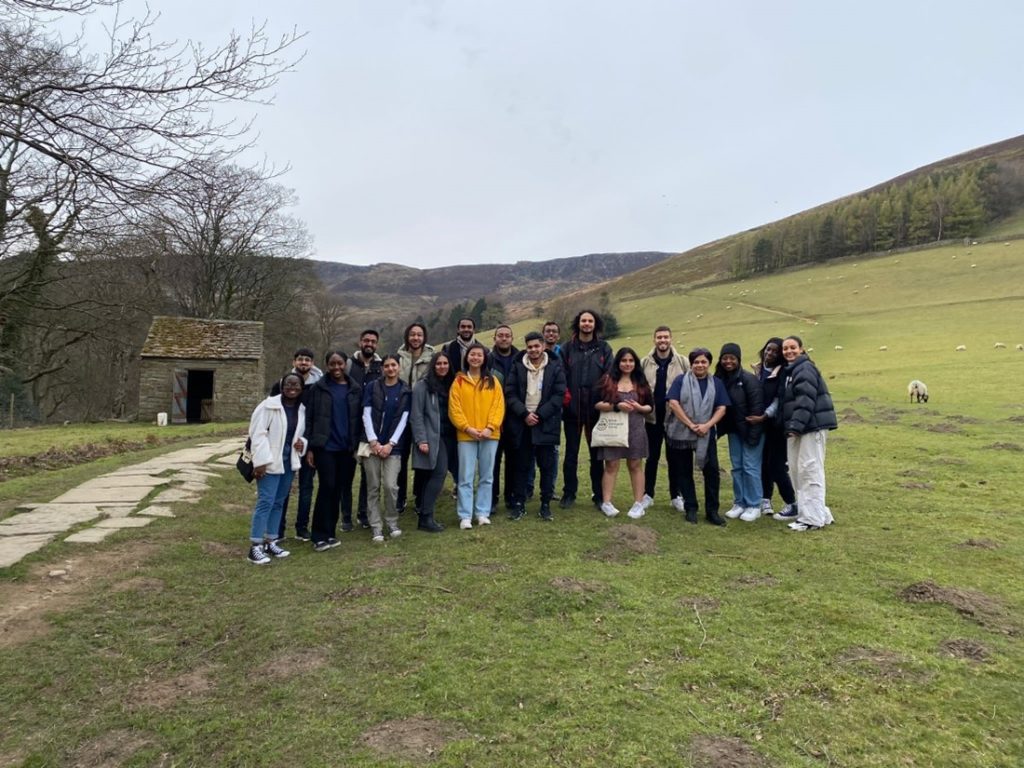
Participants of the Equator Research School (April 2022) stood amongst the hills near Edale, Peak District. They are smiling next to several sheep near a path and small barn.

What are your hopes for future PhD students?

This is beyond cliché but for future PhD students to pursue their dreams, either within or outside academia. They should be allowed to engage in research without being pressured to do too much and being forced down a niche they don’t necessarily enjoy. Funneling a student’s mind is detrimental, and limits their freedom to think. The process should be as comforting and inclusive as possible, and I hope that support networks will be provided without the need for discussion around the topic.

Any tips for those interested in applying for PhDs?

PhDs are hard work, but they can provide high rewards. Ensure you find a supervisor team that aligns with your interests, both academic and personal, as you’ll be working with them for around 4 years! Also remember that you can shape the path of your research – if you’re not enjoying it, you can vocalise it and the team will listen to you. Though there are alternative career routes after graduating from your undergraduate, it can be nice to engage with work that you can, in areas, lead yourself, even if you feel at the base of the academic pyramid.

Any tips for those interested in engaging more with EDI?

With EDI, it’s a matter of testing things out and seeing what works for you. For example, you may be of a particular underrepresented group, but that doesn’t mean you have to do the brunt of the work simply because of lived experiences. Similarly, you don’t have to belong to a particular underrepresented group, but you should do your best to be aware of issues faced by those groups, and how to exercise allyship in the best way possible. Simply put, understand your boundaries while also understanding the boundaries of others. EDI isn’t a competition – we’re all working together.

Read more about Ashar here.

Follow Ashar on Twitter @Ashar_A_Aslam
SENSE Spotlight – Jess Payne

Name: Jess Payne

Institution: University of Leeds

PhD Project title: Falling Basins: revealing hidden faults from patterns of land subsidence from water extraction using Earth Observation data

Photo of Jess Payne smiling with the SENSE EDI logo at the bottom.

What is your background?

I am a second year SENSE CDT PhD student at the University of Leeds. Prior to my PhD, I studied an undergraduate degree in Natural Sciences. This was a great way to keep learning about all corners of science and not commit to a subject which might be very different at university compared to A Levels! I particularly enjoyed Plant Sciences and Earth Sciences, the latter of which I focused on in my third year. I then stayed at the same institute for my MSci in Earth Sciences. Here I chose to learn about Natural Hazards including earthquakes and volcanoes.

After finishing my MSci, I worked for a year researching the global tin market for the international tin board. This was a great opportunity to explore how resources are used and governed, but I missed researching Earth Sciences. I particularly missed learning about all the techniques and approaches used to remotely monitor volcanoes, earthquakes, and other phenomena on our planet. I was introduced to many of these as part of my MSci project on earthquakes in China but really wanted to learn about Interferometric Synthetic Aperture Radar (InSAR). This is a really cool satellite technique that measures how the surface of the Earth is deforming! With the support of SENSE, I ended up studying a PhD that uses InSAR to measure land subsidence in Iran.

Tell us about your project and the area of environmental science are you most excited about?

My project focuses on using satellite data to measure the rates and extents of land surface subsidence in Iran. Subsidence is where the land surface moves down over time. Iran experiences some of the fastest subsidence rates in the world at up to 150 mm/yr. But how does this subsidence happen? Iran is an arid country with little rainfall and as a result has few lakes and reservoirs. This means freshwater is often instead extracted from aquifers underground. When this water is removed, gaps or empty pore spaces remain where the water once was. As there is a lot of sand, sediment and even buildings weighing down on these pore spaces, this weight forces the gaps to close or collapse. Sometimes grains around these spaces even deform. These processes result in land surface subsidence. We can use InSAR to measure where this subsidence is happening.

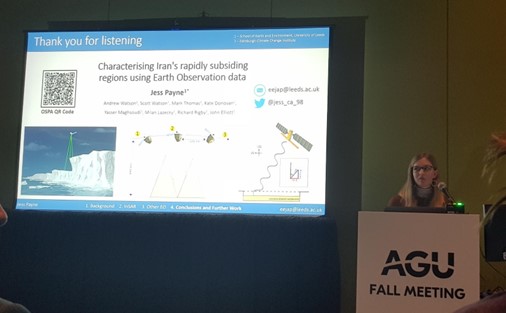
Jess Payne stood at a podium with her slides behins her the American Geophysical Union (AGU) conference.

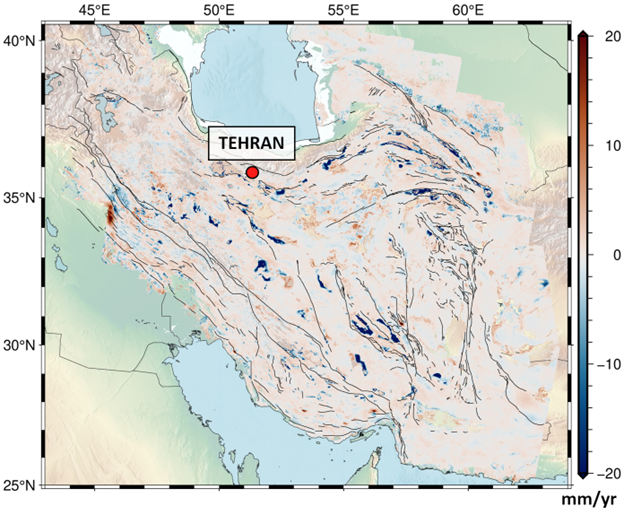
Sentinel-1 is a satellite constellation launched by the European Space Agency in 2014. The data Sentinel-1 collects is used to calculate velocity fields of the land surface. These velocity fields tell you at what rate the land is moving up or down. If we construct such a field over Iran, the regions of subsidence clearly stand out. In fact, we documented 99 of these regions across Iran and constructed the open-access COMET Subsidence Portal, a helpful tool for those interested or affected by land subsidence in the country.

Land subsidence might not appear the most exciting solid earth hazard out there, but it is often directly linked to human development, activity, and economic growth as well as climate change. Indeed, working out where subsidence is happening can tell us how groundwater resources are being managed and how changes in precipitation rates are impacted our land. Moreover, subsidence presents a threat to buildings, bridges, and people. For example, subsidence has been linked to metro line collapse in Mexico City, while communities are being forced to move out of villages in Iran to avoid buildings collapsing due to subsidence. Managing groundwater resources and resulting subsidence rates is therefore essential in our changing world.

Map of Iran with surface velocities calculated using Sentinel-1 data plotted. Areas in deep blue are subsiding or moving down, red areas are moving up. Calculated using tools developed by Watson et al., 2022.

Was using satellite data at the core of your PhD project important to you?

Absolutely! Having done a lot of geology during my undergraduate degree and not knowing the potential of satellite data, I was blown away when I first heard that InSAR could be used to automatically monitor volcanoes thousands of kilometers away. I was used to travelling to a geologically interesting place at one or a handful of times, recording a few pieces of data by hand in spot locations and using these data to come to conclusions about how the area has or is currently deforming. The enormously increased data coverage and frequency of satellite measurements has and still is revolutionizing how Earth Sciences is studied; satellite data is an incredibly useful tool to complement geological studies.

Also, studying regions which are difficult to access for political or social reasons is made a lot easier with satellite data!

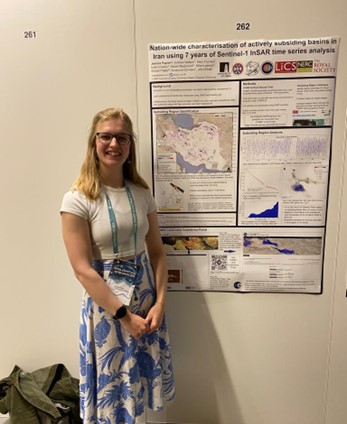
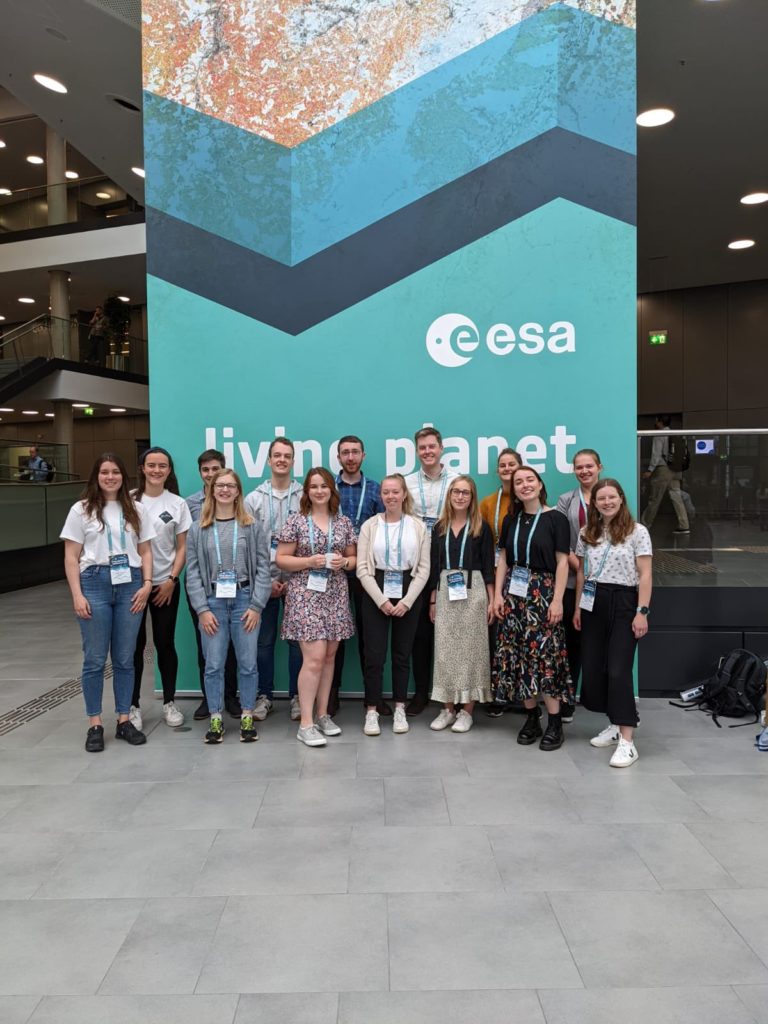
Jess Payne stood infront of her poster at the European Space Agency Living Planet Symposium 2022.

Why did you decide to enter the space sector?

Entering the space sector sort of happened by accident- my interest in Earth Sciences and Geology drew me to satellite based tools. However, I love using satellite data and would consider a related career in future.

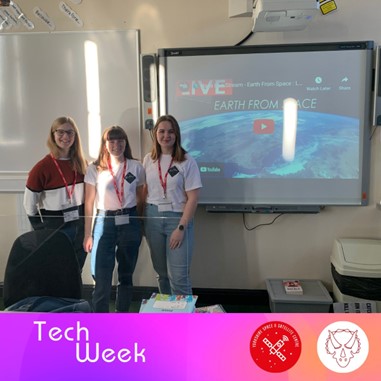
Jess Payne, Emily Dowd and Megan Udy Presenting Earth from space at Tech Week.

What are your hopes for future PhD students?  

I hope that people from any background will feel that they are able to apply and have success in applying for a PhD programme. SENSE is a really exciting programme to be part of because of the diverse backgrounds and cultures that SENSE students come from- my time so far wouldn’t be the same without the diversity among my cohort. In future, I hope more PhD programmes and institutes make prospective students at any stage of live and from any culture feel welcome.

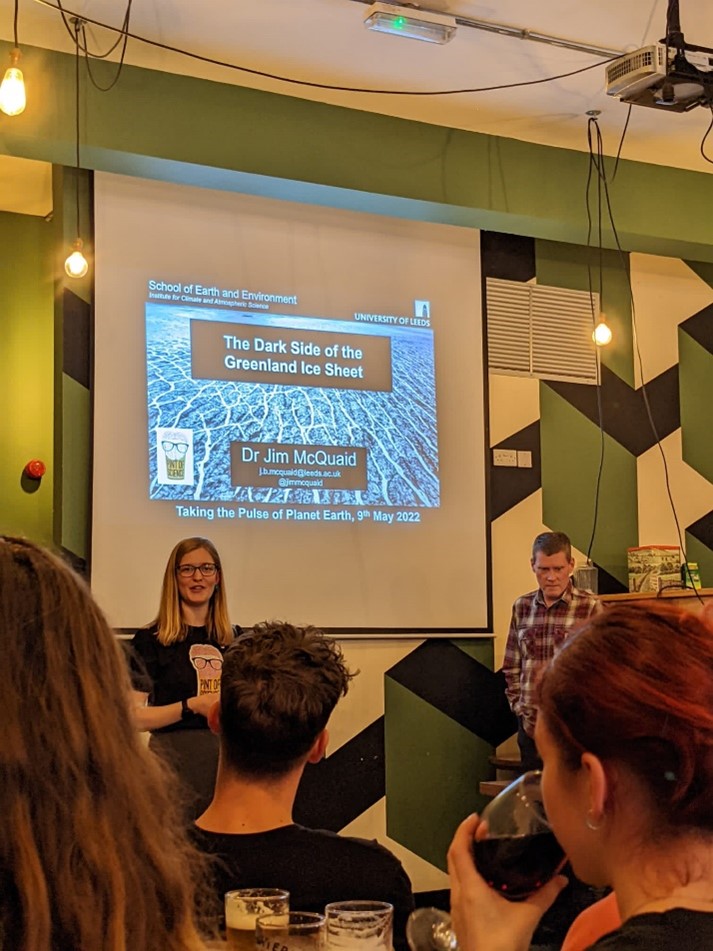
Jess Payne stood infront of slides hosting a Pint of Science which aims to communicate academic research in an accessible way.

Any tips for those interested in applying for PhDs?

Ask lots of questions and show lots of interest! Applying for a PhD can seem like a mysterious, black-box process so asking anyone you can think of how to apply is a great start. Maybe some of your peers have applied for a PhD, sometimes sending an email to a potential supervisor asking for some advice might be useful. Most people want to help and are excited about their research, so would love to chat.

Read more about Jess here.

Follow Jess on Twitter @Jess_ca_98

Charlotte’s Antarctic Adventure

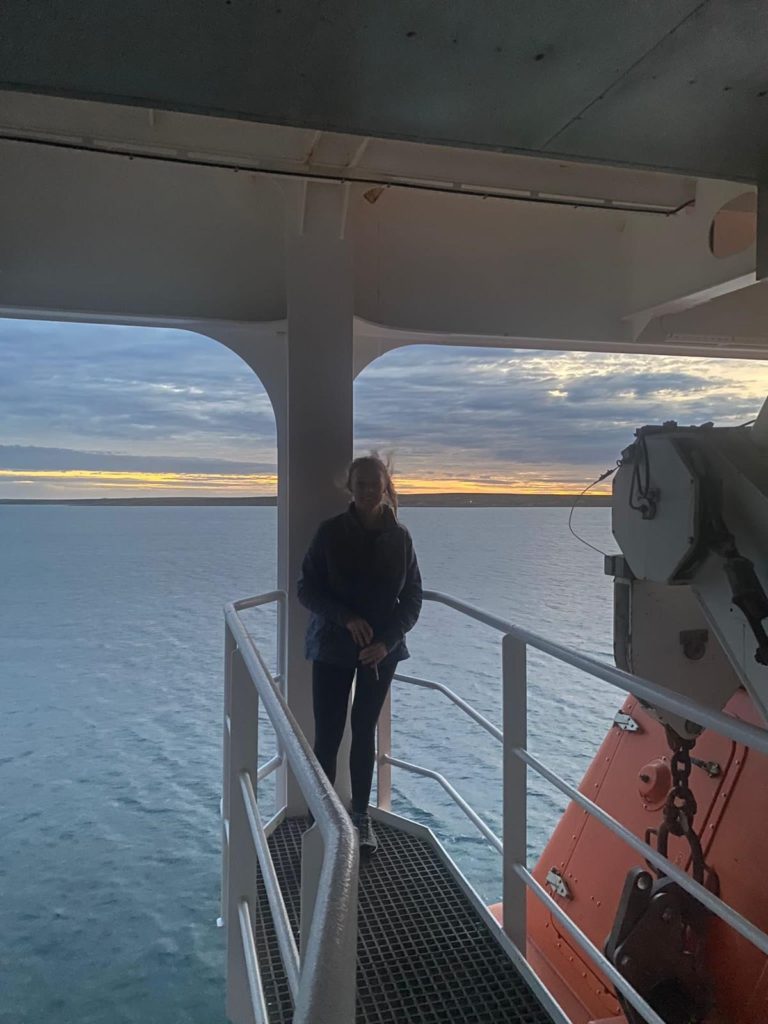
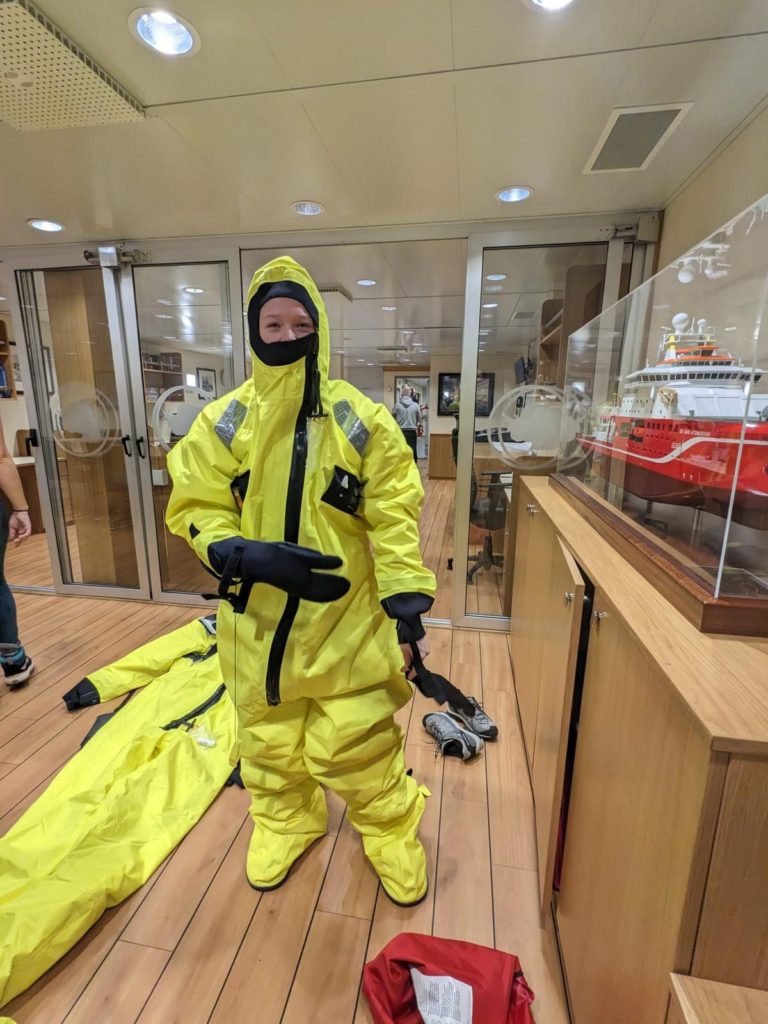
SENSE Student Charlotte Walshaw is currently on a very exciting trip to Antarctica to complete field work as part of her PhD on Remote Sensing of Antarctic Vegetation. Here she tells us a bit about her intinerary:

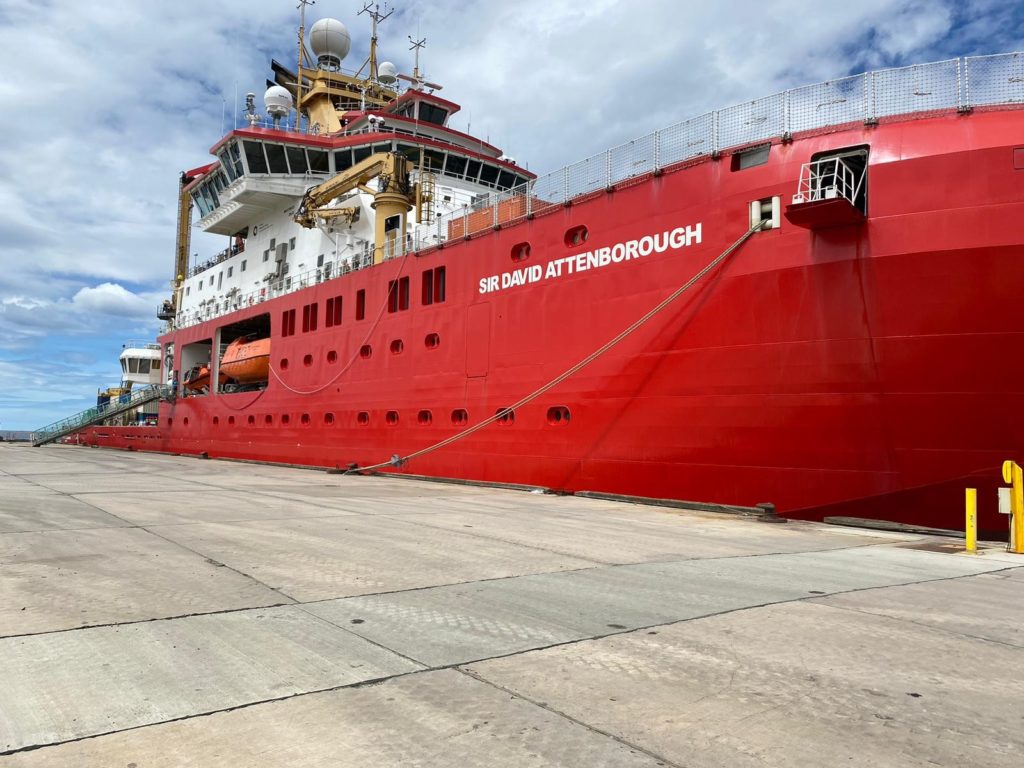
‘We’ll be flying down to the Falklands from RAF Brize Norton on an MOD flight and then travelling down to Rothera via the Sir David Attenborough across the Drake Passage. Then we will be in Rothera for about a week before departing on the SDA to our main field research location (Robert Island, South Shetland Islands) for New Years day. We’ll stay there until the end of March.

Whilst there I’ll be carrying out multispectral and hyperspectral drone flights over the terrestrial vegetation, ground-truthing Sentinel-2 satellite imagery, taking gas exchange measurements of the vegetation and helping with the data collection for the EcoSnow Antarctica project (NERC snow algae grant), which is aims to understand the past, present and future of Antarctic snow algae, with my supervisor (Andrew Gray), Matt Davey and Alex Thomson (both from Scottish Association for Marine Science SAMS).’

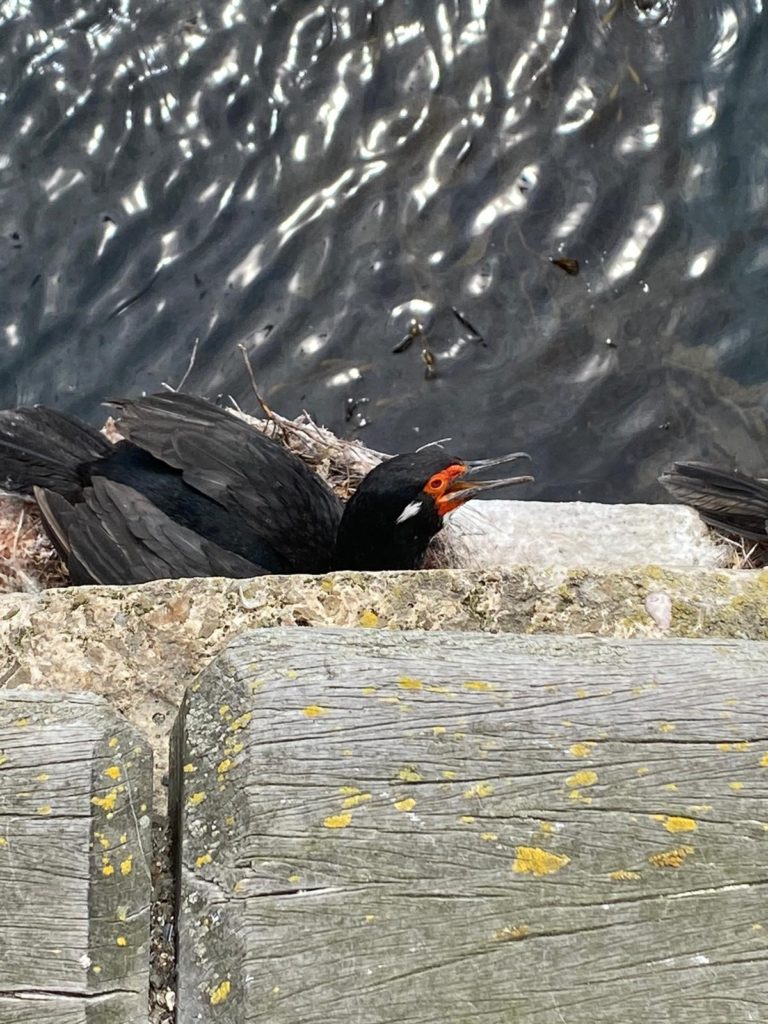
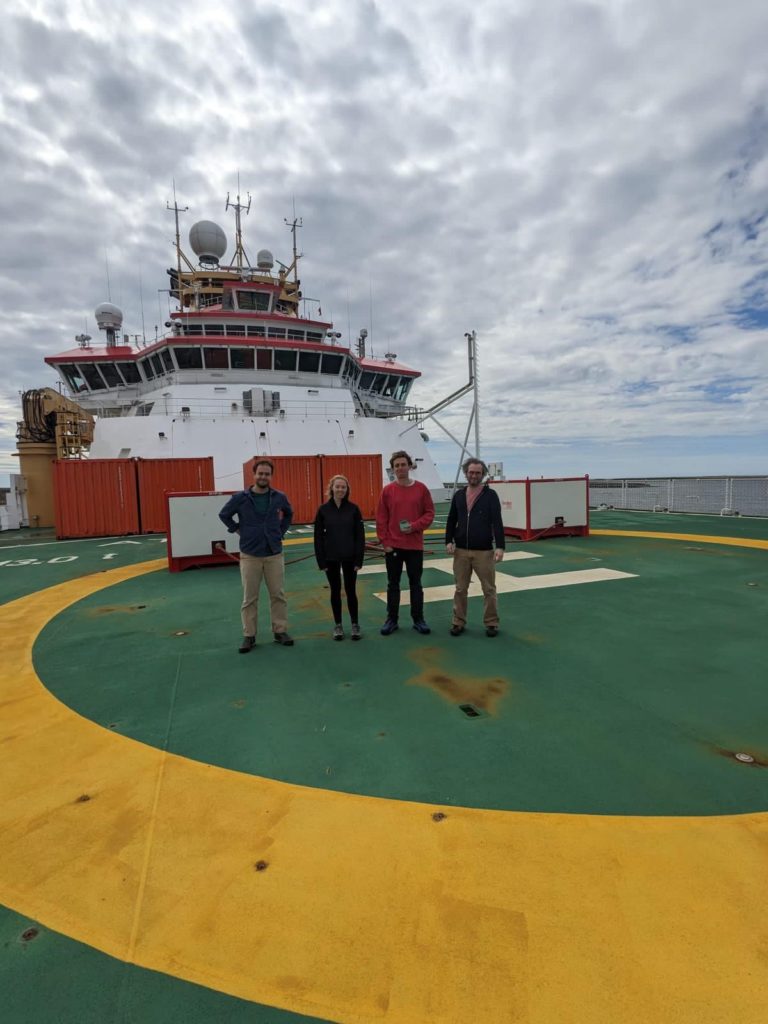
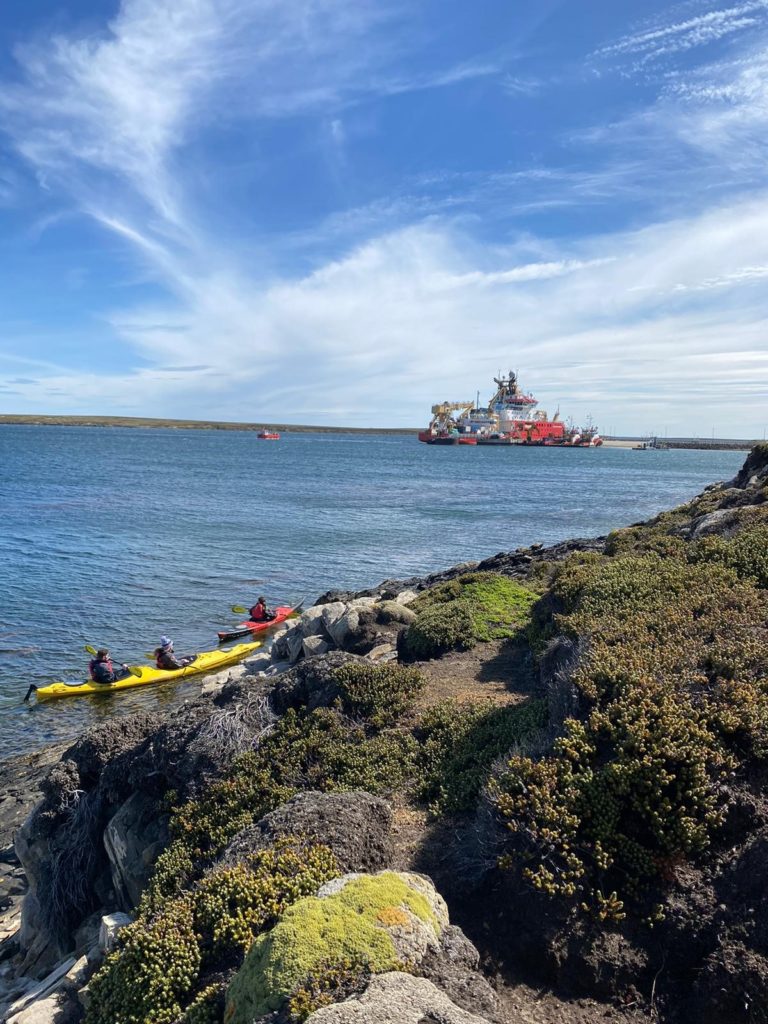
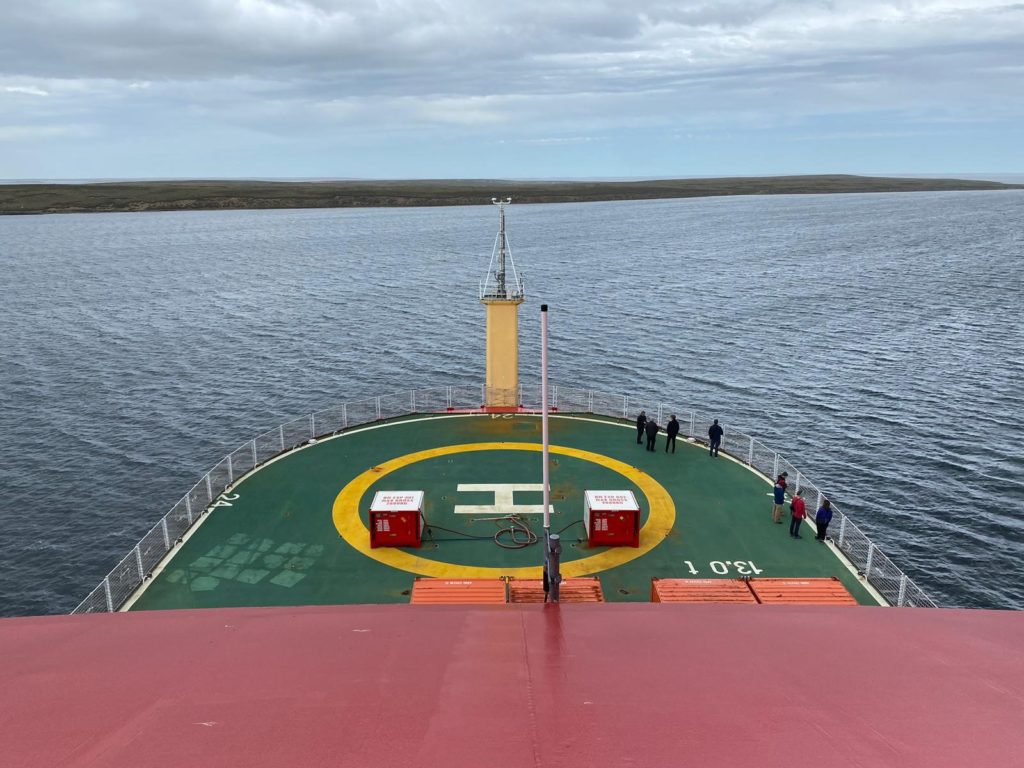
See below for a few pictures so far – we hope you are having a great time Charlotte and we are looking forward to hearing more about your trip on your return.

Charlotte is a student in the School of Geosciences at the University of Edinburgh here primary supervisor is Dr Claudia Colesie.

Applying to a PhD? It’s not just about the topic of your project

Written by Rebecca Wilks and Heather Selley.

PhDs are hard. It’s important you know what you’re committing several years of your life to and it’s not just about your research topic. Often, starting a PhD involves moving away from your support network and starting again in a new place. The SENSE Centre for Doctoral Training (CDT) dedicates significant amounts of time to supporting its students and improving its Equality, Diversity, and Inclusivity. Regardless of if you’re interested in a SENSE PhD project or a different organisation, We’ve put together a list of things it’s worth considering when looking and applying for PhDs, other than just the PhD project topic, from our and other students’ experiences.

(Credit: https://blogs.ibo.org/blog/2020/01/30/going-for-a-phd/)

Tips of some other things to consider when you are applying for a PhD:

Who will you be working with?

  • Make sure you reach out to potential supervisors AND their current students to find out about their supervision style. It’s important to get an idea of what their expectations are and whether you think it will work for you.
  • Will you be part of a larger research group? Would you like to be? Will there be regular group meetings?
  • It’s also a good idea to look at your potential supervisor’s website page:
    • What are their set of research interests, have they mentored other PhDs previously and are they involved in any other institutions
  • If you love outreach, does your department mention it? Has your supervisor worked on any EDI projects – it’s a good indication that they/the department are aware of issues or barriers you might face and the support options that might be helpful.
  • If you have any questions or concerns about PhDs or applications – ask them of your potential supervisor, their students, centre for doctoral training managers, current students on the programme, your referees, and if they have them EDI champions like me.
Line of rainbow coloured people walking arm in arm (credit:https://bookboon.com/blog/2013/12/5-myths-realities-good-teamwork/)

Opportunities:

There can be a huge amount of opportunities available to PhD students alongside your research depending upon your university or funding body, and if there is something you have your eye on, it’s good to check the availability of this ahead of time.

  • Is there any training offered and is this important to you?
  • If you want to, will you be able to undertake a placement?
  • What would your Research Training Support Fund (RTSG) like?
  • How many conferences will you be expected to attend?
  • Would your program allow you to be a Visiting Graduate Researcher at a different university?
  • Are you able to undertake relevant fieldwork? Does the department have previous experience organizing things like this?
SENSE PhD students at the European Space Agency Living Planet Symposium 2022.

Additional support:

  • What support do the Centres for Doctoral Training (CDT), Doctoral Training Partnerships (DTP) or Departments offer?
  • Does the university have any financial hardship funds?
  • What is offered in the way of financial and social support for people with families, career responsibilities or other such obligations?
  • Look for Equality, Diversity, and Inclusivity (EDI) pages on the Centres for Doctoral Training (CDT), Doctoral Training Partnerships (DTP) or university websites, it indicates they are investing and supporting diverse students.
  • Does the university have any dedicated student counselling resources?
  • Look for staff, PGR (Postgraduate Researcher) or student networks at the university, for instance: networks for chronic pain and fatigue, Disability, Accessibility and Mental health, and LGBTQIA+.-
  • Equally, if you have a hobby which is important for your well-being – is there a group for this? Communities already exist and finding different support pillars is important. 
  • Fill in the optional EDI survey that comes with most application forms – whilst it can be scary it is illegal for this to be held against you and ensures if you do get a position, you get support. Increasingly interviews are being ring-fenced for applicants with underrepresented characteristics.
  • If any reasonable adjustments during the interview would help you – request them.
People supporting each other and holding colourful puzzle pieces that connect together (Credit:https://us.123rf.com/450wm/sentavio/sentavio2002/sentavio200200114/sentavio200200114.jpg?ver=6)

Stipend Funding Conditions:

Your PhD Stipend acts in the same way as a work contract, and therefore will cover details about annual leave, sickness etc. These will likely vary between funding source, and therefore two students in the same department at a university may have different conditions on their funding. You should be able to request details on this, for example SENSE is funded by NERC and so their standard conditions apply, but more generally you could enquire to your potential supervisor or the funding body responsible on their website (e.g. CDT/DTP contacts, research councils NERC, ESPRC). Bare in mind the interaction between this contract, and university rules.  Things to consider:

  • How much is the annual Stipend? What is the annual expected rate of increase?
  • How many work hours are you allowed to spend per year on secondary income (e.g. demonstrating, other part-time roles)
  • Some students choose to ‘master-out’ after a year if they find the program is not a fit for them, or personal obligations mean they need to leave the program. In this case, would the stipend need to be repaid?
  • What is maternity/paternity pay?
  • What is the sickness policy?
  • What is the annual leave policy?
  • Who owns any product IP generated during a PhD? If you have corporate sponsors, then this may be more complex.

The place and sense of place:

Enjoying the place you live can play a huge part in your day-to-day happiness, and so if you have to relocate for a PhD, it’s good to get an idea of about your potential new city and if it’ll be a good fit for you.  Some great resources for this include reading travel guides to towns, blog posts of students living there and general pros and cons lists online.

  • Can you see yourself living in the area for the next few years?
  • What are the transport links like in the city?
  • What are the transport links out of the city to home/family/friends?
  • If you have a car, how easy/expensive is it to get a permit/space?
  • What’s the social life like?
  • Is it cosmopolitan/isolated?
  • What is the weather like?
  • How close will you be to nature?
  • Cost-of-living: Will you be able to rent solo, or need to flat-share. Different areas will be able to afford you different setups with the PhD Stipend.
Illustration of a map with a large red pin marking a location (Credit:https://media.istockphoto.com/id/535913739/vector/vector-map-with-pin-pointer-illustration.jpg?s=612×612&w=0&k=20&c=k70y-GYfXRUiuSdq7ie_BF9Mvry6XlgZV3ENFR-TDJk=)

Working Environment:

  • Where would your department be?
  • Does the location have things you may need – bike storage, places for lunch etc?
  • Would you be in a shared office?
  • What commute will be required?

PhD Ways of Working:

A PhD marks a significant change in ways of working, from classes within a structured undergraduate syllabus, to exploratory independent research with supervisor guidance, including:

  • Managing your own time
  • Meetings to work with supervisors to build out ideas, get support on outstanding questions and present findings from hypotheses tested
  • Supervisors will provide guidance, but ultimately you are in the driving seat to get outputs
  • Classes if you require them
  • Sometimes there is no ‘right’ answer – you’re defining what should be done 

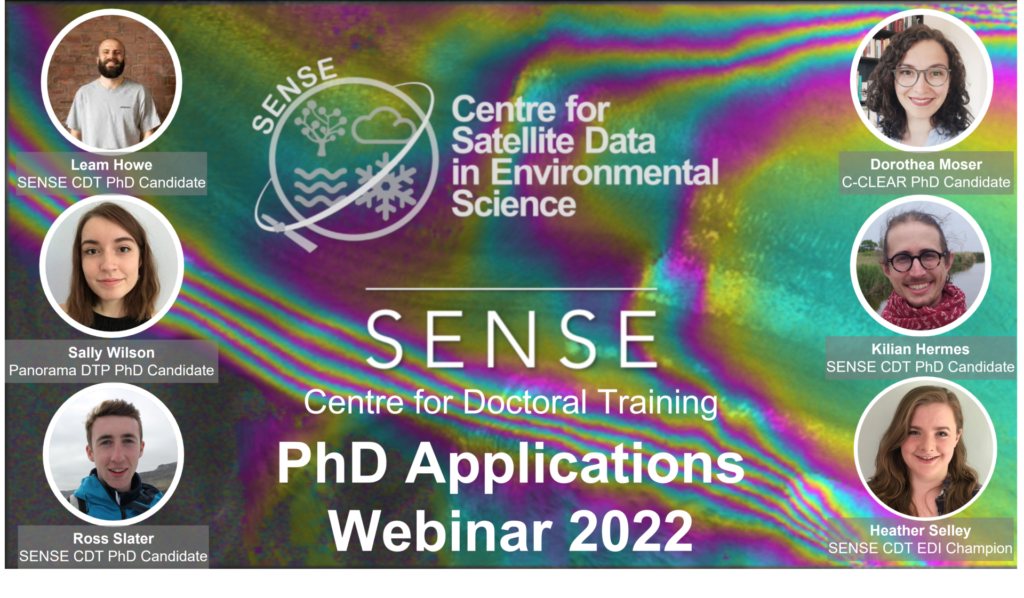
There are many things to consider when applying for PhDs and this is a list compiled a few key areas, to hear in more detail and more perspectives please check out our “Demystifying PhD Applications Webinar”.

Slide with a rainbow coloured interferogram stating SENSE CDT PhD applications Webinar 2022 and with pictures of the panellists.

You can also watch previous years webinars here:

If you have any questions about applying for a SENSE PhD please email [email protected].

Am I able enough? My experience as a disabled PhD student

By Heather Selley

Hi, I’m Heather I’m working towards my PhD, and I’m disabled.

A photo of Heather Selley smiling.

How did that make you feel about me? As International Day of Disabled Persons is coming up (3rd December), I wanted to share some of my personal experiences being a disabled PhD student and some things I hope will be useful to think about if you’re considering a PhD (whether you’re disabled or not), if you’re an academic or work with PhD students.

A few years ago, I would be terrified to state to friends I’m disabled, let alone put it on the internet. I’ve had people in my life laugh when I say I’m disabled as they thought I was joking – I wasn’t. I just have the mythical creatures of invisible disabilities. I’m dyslexic, making me neurodivergent. I was diagnosed in the first year of undergrad, but I had gone my whole life without confirmation and just suspicions. For a long time, I didn’t think my dyslexia affected me ‘enough’ to be called disabled. I used to write in the box on application forms for accessibility adjustments ‘I’m dyslexic but don’t need any adjustments and wear it like a badge of honour. It took developing chronic illnesses, in addition, to realise “oh yeah, I’m disabled”. There was a gigantic amount of internal ableism I had ingrained in everything I thought about myself.

Image of outlines of a number of people in different colour with different ways of thinking represented by things like cogs, numbers and puzzle pieces (Courtesy: iStock).

Side note, chronic illnesses really are ridiculously effective for teaching you how to prioritise your work and time, which is a highly desired skill. Having said that, this is your reminder that your worth isn’t defined by your productivity – you have immense value innately as you are. You also don’t have to have multiple disabilities or, in my opinion, a full diagnosis to be ‘disabled enough’ to be part of the disability community. 

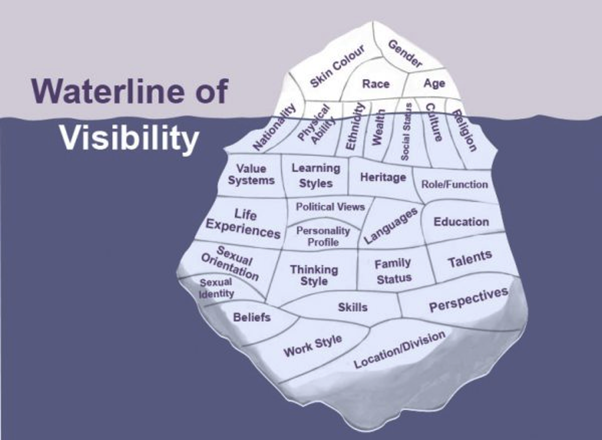
I didn’t think I would be able to get onto a PhD programme as I was so concerned at the application stage that people would view my dyslexia as a disadvantage because often it is not associated with being very ‘academic’. I felt the need to go above and beyond to show I was good enough, even once accepted onto my PhD programme which is a recipe for burnout. Not all identities and diversities are visible. Just because you don’t see someone like you doing a PhD doesn’t mean you wouldn’t be excellent at one.

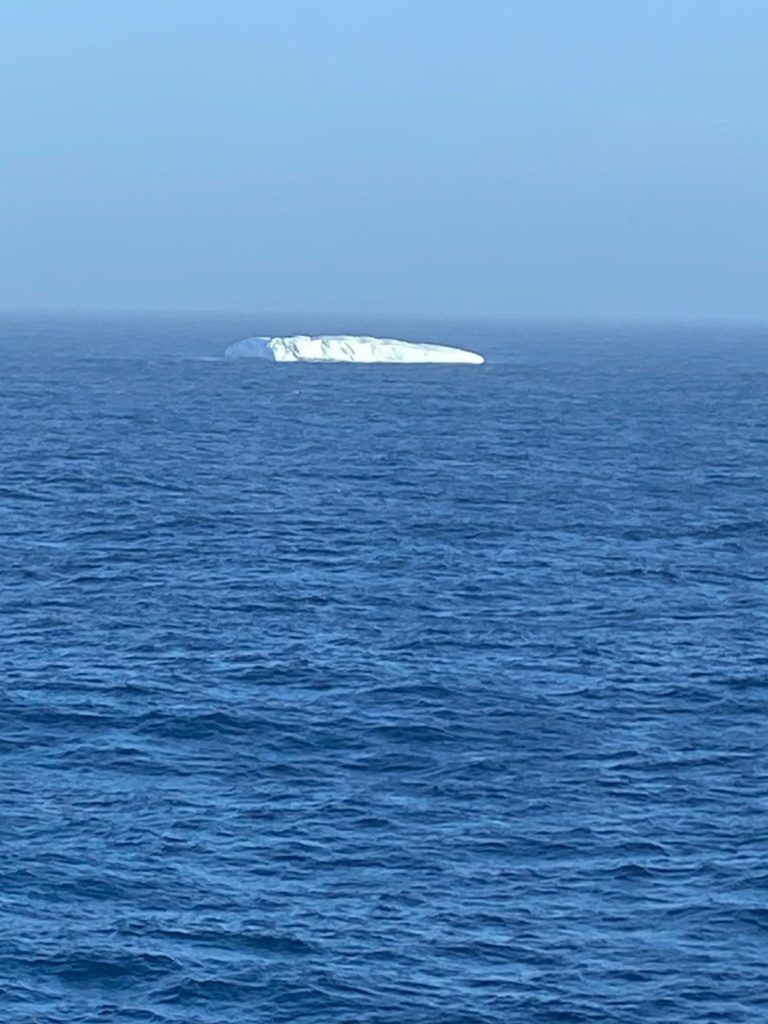
Waterline of Visibility. Image of an iceberg where a small portion is above the surface with characteristics such as gender, race and age. The remainder is shown below the surface sharing a variety of hidden characteristics such as life experience, sexual identity and physical ability (Credit: https://www.auraforrefugees.org/index.php/sponsor-toolbox/resources-list/exercises-to-be-done-individually-or-in-a-group/iceberg-identity-exercise)

My PhD uses satellite data to look at changes in ice speed in Antarctica – which requires good pattern recognition, and you know who has great pattern recognition skills? That’s right, many dyslexics – including myself. Other characteristics are being creative and artistic – and you know what that helps with? Making maps, animations, and outreach materials. Also, my brain you could say doesn’t take route A – so often I’m quite good at communicating complex issues as I have thought through so many ways to explain it – you know what a great analogy for picturing how a valley glacier flows? Pouring custard onto a pudding. I realise all this may sound like I’m just telling you things I think I’m good at – but I hope you can see how my dyslexia has given me many strengths which means I am suited to my PhD. Whilst it would have been nice to realise this at an earlier stage of my PhD, and life really, at least now I can share my experiences and hopefully save a few PhD students and applicants some of the worry and stress.

PhDs are hard and I have not always had the easiest ride, but it took embracing my disabilities and working in my own way to find my place. It has opened a whole world of new opportunities and challenged me to learn more about myself than I could ever imagine. When I stopped constantly trying to prove I could be ‘normal’ and ‘keep up’ a new world opened. It led me to get involved with Equality, Diversity, and Inclusivity (EDI) work which I’m passionate about and has much improved my well-being and, as a side effect, my work. This is just my story and I recognise I carry a lot of privilege being a white woman with a strong support network, including a PhD supervisor who always had my back. Unfortunately, this may not be everyone’s experience. As we are in PhD recruitment season, I wanted to share some of my story. I know when I was applying for PhDs, I was so concerned about them wanting me and getting a project that I didn’t really put too much thought in about if it was a good fit for me – luckily it was – but it’s important you know what you’re committing several years of your life to. Next week I’ll be sharing some of the other things it might be worth considering if you’re planning to apply for a PhD.

 
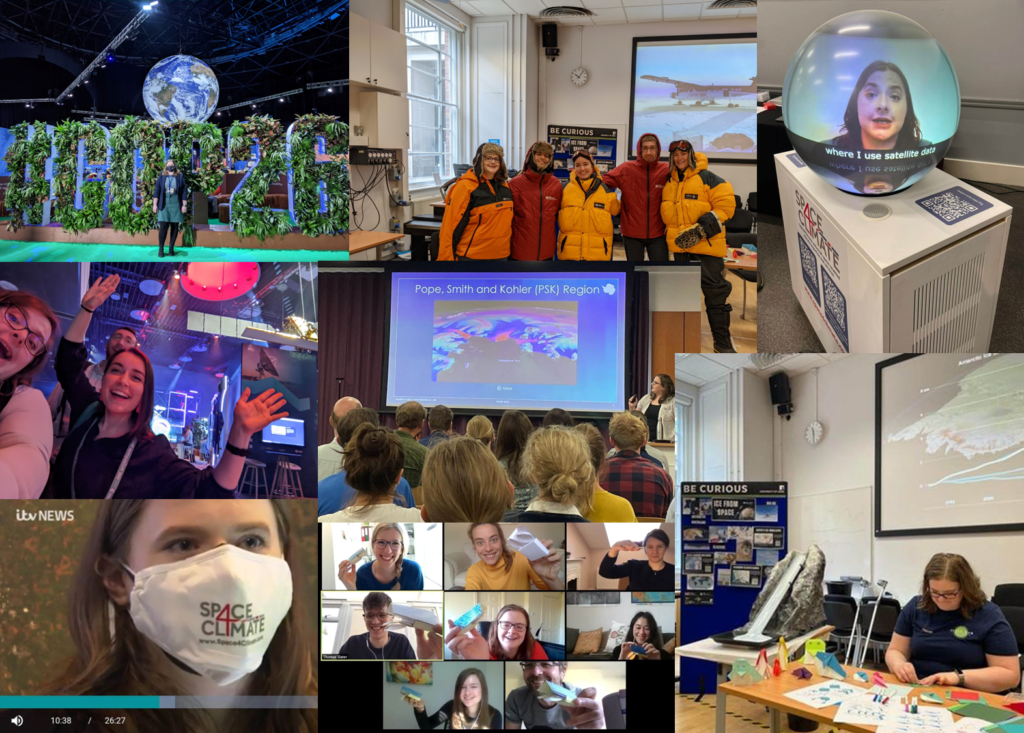
Collage of Heather doing a variety of fun things during her PhD such as presenting at COP26, dressed up in Antarctic gear for outreach, her face projected on an interactive globe where she’s talking about satellite data, making origami satellites and being interviewed on the television.

Find out more about Heather’s EDI Champion work: https://eo-cdt.org/2900-2/

Find out more about some of Heather’s other work: https://environment.leeds.ac.uk/see/pgr/2267/heather-selley

Anrnav Sinha – Internship Blog Post 2022

What are you studying?

Computer Science

Tell us a bit about the project you have been working on this summer?

It was a project based on weather data and predicting the locations which require a weather station to be setup by the government depending on change in climate over the past years and population of the area.

What new skills have you learned while doing this internship?

Academically I learned more about python, working with huge datasets provided me some insights on how to analyse enormous data and different python packages required for doing the task. I also learned a lot of life skills from Daniel and how to go about planning my career.

How have you found working with your research team?

It was really good experience, and I loved the experience to work with such accomplished people.

What has been the highlight of the internship for you?

The way it has helped me develop my work ethic and realise how to go about high demanding tasks. Also, another thing I would like to mention is that I learnt how to search properly.

How has doing this internship changed your plans or thoughts about your future career?

Provided an impetus to think about working on a research paper.

Call for project ideas for a possible Cohort 4 NERC SENSE Earth Observation CDT PhD studentships

Deadline: 30th November 2022

We would like to announce a call for PhD project proposals, for a possible Cohort 4 of the SENSE Earth Observation CDT recruitment, for studentships starting October 2023. Please note we are making this announcement now so we can quickly proceed to recruitment should funding be confirmed.

The key facts are:

  • All PhD projects will focus on using Earth Observation data, with many projects also expected to make use of advanced computer techniques such as machine learning.
  • The number of projects advertised and students recruited will depend on funding however in previous rounds we advertised around 32 projects for 16 studentships.
    • Note, in order to ensure we maintain a good success rate for the advertised projects, not all submitted PhD proposals will be advertised.  
  • To encourage collaboration across the SENSE community, all supervisory teams must have co-supervisors from at least 2 SENSE institutes
    • Leeds, Edinburgh, BAS, NOC – we will provide support in linking you up
    • We welcome additional co-supervisors from other non-SENSE institutes
  • All students will be registered at the Universities of Edinburgh or Leeds (50/50 split)
  • All students will benefit from attending a comprehensive EO training programme in their first year and other training and cohort building opportunities during their PhD.
  • All students will undertake a 3-month industry placement
    • We have a number of industry partners who are interested in matching with academics and offering placements, and your own industry connections are welcomed 
  • Project proposal submission deadline is the 30th November 2022
  • To submit a prospective PhD proposal for the October 2023 cohort, please fill out this form 

SENSE’s recruitment committee will select the best projects that align with SENSE’s specific remit for advertisement should funding be confirmed. For further advice and top tips about how to submit a good SENSE PhD proposal, please see attached document: SENSE PhD proposal writing tips as well as the recruitment schedule below.

Prospective Recruitment Schedule

Because we have yet to receive confirmation of funding this is only a draft schedule. We would hope that we would be able to fit in with a similar schedule from previous recruitment rounds and match the universal acceptance CDT/DTP deadline of 15th March 2023.

  • Projects advertised – Early December 2022
  • Application deadline – Mid January 2023
  • Interviews and offers made beginning of March 2023
  • Cohort starts 1st October 2023

If you have any questions or if you’d like any support with your project proposal please get in touch with Arpna Virdi at Leeds ([email protected]) or Eleanor Graham at Edinburgh ([email protected] ).

Information Event – Introduction to ESA Climate Office and Climate Change Initiative Fellowships – Wednesday 23rd November, 2pm(gmt)

Online event

The SENSE CDT is hosting an information event with staff from the European Space Agency (ESA) climate office. This will be of interest to researchers who are keen to work with the climate office and PhD students who may be interested in applying for a postdoctoral fellowship with ESA.

Please visit for further details:

Schedule for Event

Introduction to the Climate Office – what we do and how to best engage with us.

Using satellite-derived climate data products for research: examples from terrestrial carbon science.

Coupled Model Intercomparison Project (CMIP) at ESA: Linking EO to climate modelling activities.

ESA Climate Change Initiative (CCI) fellowships for post-doctoral research.

Experience of CCI fellowship from Dr Elisa Calamita

Elisa was awarded the ESA CCI (European Space Agency, Climate Change Initiative) Postdoctoral Research Fellowship for 24 months, which presently supports her position as a Postdoc at Eawag (Swiss Federal Institute of Science and Technology)

Q&A

This event will be held on teams – to sign up please use the link below

https://www.eventbrite.co.uk/e/introduction-to-esa-climate-office-cci-fellowships-tickets-429167360127

The event is on Teams, joining details to be circulated closer to the time!

Thomas – Internship Blog Post 2022

What are you studying?

I am studying for a BSc in Computer Science at the University of Edinburgh. I am about to enter my third year, where I will be studying abroad at the University of California.

Tell us a bit about the project you have been working on this summer?

My project aims to take data collected from the NASA LVIS airborne LiDAR to study patterns of canopy cover in tropical forests. Through investigating these patterns, I hope to have answered two questions. My findings relating to the first question “What patch sizes do the very highest canopy covers occur in?” have implications for the design of a future LiDAR satellite instrument proposed by GLAMIS (Global LiDAR Altimetry Mission). I hope to formalise my findings relating to the second question “What maximum leaf area can a tropical rainforest support?” in an academic paper, with the aim of publishing it at the end of the year.

What new skills have you learned while doing this internship?

I learned many new skills while undertaking this internship – skills that are essentially either technical or transferable. On the technical side I learned a great deal about the Linux operating system and vastly improved my proficiency in python. I was also fortunate enough to audit two postgraduate courses – “Active Remote Sensing: Radar and LiDAR” and “Object Orientated Software Engineering: Spatial Algorithms”. Through studying these courses, I learned about LiDAR, novel programming approaches, and the use of QGIS (an application to analyse geospatial data). I was also able to develop several somewhat less tangible skills, such as problem solving, communication, and time management. The project was relatively independent, and at times, I found it quite challenging to keep to task when trying to solve problems – I overcame this by communicating effectively with my supervisor and being disciplined with how I managed my time.

How have you found working with your research team?

I found working with my supervisor Steve and several of his colleagues to be incredibly rewarding. Steve was very generous with his time – he was always attentive to my many questions and was very patient when there were aspects of the project that I did not understand. I feel very grateful to have had the opportunity to work alongside someone such as Steve – at times, it was very inspiring.

What has been the highlight of the internship for you?

The highlight of the internship was the chance to present some of my initial findings to the other REP interns in Edinburgh and Leeds – I really enjoyed meeting the other interns and seeing what they had to present.

How has doing this internship changed your plans or thoughts about your future career?

I think that this placement has led me to appreciate how challenging independent research projects can be, but also that at some point in the future I would like to take the chance to undertake one, or perhaps to at least continue to study at postgraduate level.

Sara – Internship Blog Post 2022

Sara Bennie

What are you studying?

BSc in Astrophysics

Tell us a bit about the project you have been working on this summer?

Surging glaciers cycle through quiescent and active phases. These phases
lead to changes in surface velocities and elevations, transporting mass
towards, and often advancing, the termini. Those living alongside these
glaciers can be at risk of outburst floods or collapse events. Until recently,
large changes in surface elevation were seldom quantified owing to a lack of
measurements. The project I have been working on aimed to use these
measurements of change in surface elevation, from the multi-decadal ASTER
archive (2000-2020), to begin development on automating an identification
process, for glacier surges, within the Karakoram.

What new skills have you learned while doing this internship?

I have developed a variety of different skills, from gaining technical
experience with Google Earth Engine and Jupyter Notebook, to improving my
communication and presentation skills. Most importantly, I have developed my
scientific research skills, learning more about how real data is handled and
then analysed.

How have you found working with your research team?

My research team were amazing! They were all very welcoming and taught me
loads, from everything I needed to know about glaciers, to what it is like
doing further research after a degree. My supervisors, Liam and Duncan, were
fantastic and made me feel like a real part of the research team by getting me
involved in different events and opportunities, such as ‘Ice Club’ and
presenting a poster at the IGS British Branch.

What has been the highlight of the internship for you?

Being able to meet and learn lots from my research team, whether developing
new skills or finding out what being a researcher is like. I also attended the
IGS British Branch conference where I presented a poster summarising my work
over the placement. This was an excellent networking opportunity where I got to
chat with other glaciologists, at various points in their careers, about their
recent and exciting research developments.

How has doing this internship changed your plans or thoughts about
your future career?

I am now definitely considering further research after graduation and would
be keen to continue researching glacier surges after such an incredible
experience!